
04 Jun 2026
You get told about GvHD but you don’t realise it can be this severe.
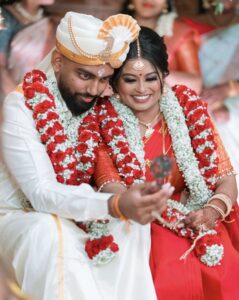
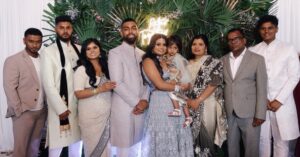
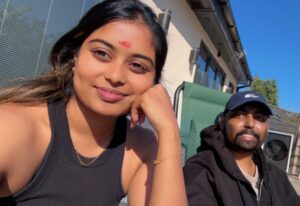
Tarun and his wife Yoshi
“Everything happened so fast. We were both just so shocked I don’t think we knew what to say to each other for the first time in our lives.”
Tarun Ramjeeawon survived his rare leukaemia, fought against severe Graft Vs Host Disease (GvHD), but lost his life from covid which he caught in hospital after GvHD complications left his immune system severely depleted. GvHD is a common side effect after a donor cell transplant, where the cells attack the recipient’s body.
Tarun and his wife Yoshi were on honeymoon in Croatia in June 2024 when he began to show early blood cancer symptoms. Just 24 at the time, the recruitment consultant said his calves ached and he couldn’t walk much. As the months progressed he couldn’t stand to cook at home without needing to take a break and sit.
“We’d had a beautiful wedding at the start of June,” said Yoshi, 26 who is a speech and language therapist and lives in Wallington in Surrey. “He’d had one or two bad nose bleeds that year and then aching legs. The nose bleeds became more frequent in the autumn, and then on 26th October a lump suddenly appeared on his neck. He had lower back pain which we thought was work related. But the lump was soon bigger and harder and several appeared around his jaw and neck.
“The GP said the nose bleeds and the back pain were weak vessels in his nose and a hernia. Due to this lump, I pushed Tarun to call the GP again. They said to wait a few weeks as it may be a response to infection. I’m in the health service and to me this didn’t seem right so we called again and the GP said “it’s probably nothing to worry about but we will refer you for an ultrasound”.
“Yoshi’s brother and sister became concerned too and pushed him to see his GP again before the ultrasound results. He was reluctant to try again because of how it had gone before. Yoshi’s brother eventually took him to A&E to ask for an urgent blood test.
“They did the test and there was a 9 hour wait time. Tarun felt too fatigued and achy to sit in the hospital for the results so we went home. His old GP told me they couldn’t access the results so by mid-November I had enough and I registered him at a new medical centre near our home. He had to have a new patient’s health check and then we requested an appointment the same day. I asked them to access the blood records and sent them the ultrasound results myself from the other hospital. The new GP told Tarun immediately that this lump is not normal and he would need to be referred onto a two-week pathway for people with suspected cancer.”
 On 3rd December Tarun had his first appointment at Epsom General Hospital for blood tests and biopsies. He had a PET scan on 11th December and was then referred for more tests at the Royal Marsden Hospital in Sutton which showed a very low platelet count and elevated white cells.
“By this point he started sweating at night and developed sleep apnea and a purple cloud of lumps in the back of his throat.”
Just six months after celebrating his wedding, on 20th December 2024, Tarun was diagnosed with leukaemia.
“The initial diagnosis was ALL but once the bone marrow results came back, myeloid cells were detected and we were informed this was T/myeloid mixed phenotype acute leukaemia (T/M-MPAL).”
(T/M-PAL) (also referred to as T-lymphoid/myeloid mixed phenotype acute leukemia). This rare and aggressive combination of acute forms of myeloid and T-lymphoid leukaemia accounts for less than 1% of all leukaemia cases globally*
“I still remember Tarun saying “Are you sure you haven’t got this wrong?”. My heart sank. I kind of knew this was going to be serious but I thought it was maybe lymphoma and remember looking at cure rates before I even got this appointment.
“He really wanted to go home and open presents because it was his first Christmas after we got married and it was all he cared about. We went home assuming they would call us back the next day. However, the haematologist called the same night asking him to return, saying that they are really concerned about how unwell he was. We opened the presents as a family, packed and went straight back.
“Everything happened so fast. We were both just so shocked I don’t think we knew what to say to each other for the first time in our lives.”
Tarun’s treatment began on Christmas Day 2024.
“We had been to the andrology department so he could give a sperm sample. That was a whole other thing to take on board. And then he was first given steroids and then chemotherapy. He had a really tough time on Mercaptopurine (6MP) which was reduced. He took three types of anti-sickness and even then we had to plan when he ate to avoid nausea.”
 After a month in hospital, Tarun went home just before his 25th birthday. He returned for the second round of chemotherapy as a day patient. Tarun went into remission in April 2025. But he was told chemotherapy alone would not cure him and he would need a stem cell transplant.
“He was concerned because it was already so tough and we knew transplant chemo was even tougher but at this point it felt like “what is the alternative?”. I still remember sitting with the consultant and she said ‘this is your decision’. I really felt like he was going to say no. But he took a long hard look at me and said okay and that moment I knew he was just going to fight this for me.”
On Friday 9th of May Tarun was admitted to the Royal Marsen in Sutton to begin five days of intense chemotherapy and full body radiation. On 15th and 16th May 2025 he was given two types of cord blood stem cells via Anthony Nolan and NHS Blood and Transplant.
“Afterwards he had all the side effects; nausea, vomiting, his naso-gastric tube wouldn’t stay in, and he lost
more than 10kg. He had neuropathy and mucositis in the mouth, and needed a nebuliser to help with his breathing. Everything felt difficult.”
Tarun went through multiple infections and fevers which proved resistant to antibiotics. He also contracted norovirus. He was taken to intensive care in the Royal Marsen in Chelsea where he spent two months and was diagnosed with stage 4 Graft versus Host Disease (GvHD) of the skin, liver and gut.
“Initially we were told he was on a very tight rope and we just had to wait and see. Eventually by some miracle his white cells started engrafting, and he was given two treatments including the advanced immunotherapy extra corporeal photo pheresis for GvHD which turned things around.”
 In August, Tarun was transferred back to the Royal Marsden in Sutton and at the end of the month was allowed home with a walking frame, bathroom adjustments, community nursing support and regular hospital trips for tests and treatment. Yoshi also took on the role of carer.
She describes September 2024 as their “beautiful month together”.
“We went to his sister’s wedding, even though he was in a wheelchair. We went to the gender reveal party of the first baby in our friend circle. There were dinners and parties and he asked to do all these things. For the first time we both felt happy.
“Then all of the sudden in October he was back in hospital with gall stones, an infected gall bladder, klebsiella (a dangerous gut bacteria) and pneumonia. They didn’t want to operate on the gall bladder because his platelets were extremely low but he was given fluid and medications.”
After three weeks Tarun was allowed home for a fortnight but was again admitted in November with the same excruciating pain. The gallstones were removed, but he contracted covid on the ward which left him on a ventilator. He was taken back to the Royal Marsden in Chelsea. Tarun died with Yoshi and his loved ones by his side on 30th December 2025.
 “What a whirlwind of treatment we truly went through and an unsurmountable level of pain to get him cancer free but the level of immunocompromisation from the GvHD and the gallstone infection plus covid meant there was a point of no return anymore.
“The importance of the need for kinder treatments is so clear to me now in this journey, and also greater research into mixed phenotype acute leukemia. You get told about GvHD but you don’t realise it can be this severe. I have support and counselling, and I post online rather than keep it all to myself. But my heart is broken. He was incredibly beautiful and my perfect person.”
*Swerdlow SH, Campo E, Harris NL, Jaffe ES, Pileri SA, Stein H, et al. WHO classification of tumours of haematopoietic and lymphoid tissues, revised. 4th ed. Lyon, France: World Health Organization; 2017.
Share your story
We want to help people tell and share the leukaemia stories that matter – stories like Tarun’s and stories like yours.
Related posts
27 September 2024
Leukaemia UK calls upon government to increase blood testing capacity
Together with Leukaemia Care, we’re calling on the new Secretary of State for Health and Social Care to focus on ‘business as usual’ primary care testing alongside innovation, amid concerns…
3 July 2025
Together we are changing lives – Here’s how your support is making it happen
At this point in our advocacy journey, we wanted to share an update to you, our supporters, on everything we’ve achieved so far and what’s next as we continue to…
18 October 2021
Leukaemia UK drives forward progress for leukaemia research through five new John Goldman Fellowships for 2021
Leukaemia UK announces five new John Goldman Fellows for 2021 to accelerate progress and stop the disease devastating lives.
24 August 2022
Non-existent awareness of leukaemia symptoms “extremely worrying” – say leading UK leukaemia charities, as they launch memorable new campaign to get people “parroting on” about the symptoms
People over 55 also underestimate their risk, thinking that leukaemia is a childhood disease. Only 11% of over 55s thought that they had the greatest risk of leukaemia[1], whereas in…