
07 Jul 2026
“Leukaemia has changed my life for ever”
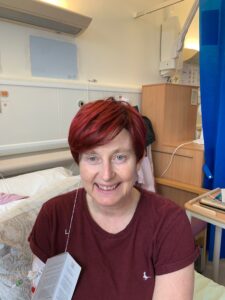
Ruth Wake
A devastating relapse nine months after her stem cell transplant launched Ruth Wake into a “fight for her life” which would eventually instigate a national campaign for change.
Ruth was shocked to learn that under NHS guidelines she would not be eligible for a second transplant as she had relapsed within a year. After looking into the paperwork, she also realised that the current policy around this rule was outdated and other countries were carrying out trials and transplants on patients who’d relapsed in under 12 months. She decided to publicly highlight the issue, shocked at the unfairness of the situation which meant she could eventually have the second transplant others would be denied, through her private medical insurance.
Ruth, 58, from Brewood in Staffordshire, was diagnosed with acute myeloid leukaemia (AML) in January 2024 after a routine blood test. She an extremely fit runner, squash and pickleball player. But a blood test as part of a routine health check revealed the shock news that she had leukaemia.
“I had covid in November 2023 and took over a month to recover,” said Ruth who worked at the time as a senior manager at HSBC. “Looking back now that was probably a sign but I thought nothing of it. Every year, my company pays for me to have a health MOT with BUPA; blood tests, cholesterol checks and an ECG. The blood test came back with a high level of ferratin and low levels of haemoglobin. It was strange as I felt fine and had no idea anything was wrong.
“The BUPA doctor thought it was possibly down to me having had covid recently and asked me to come back for a retest in two weeks’ time. I returned, fully recovered from covid, but my bloods showed the same results.”
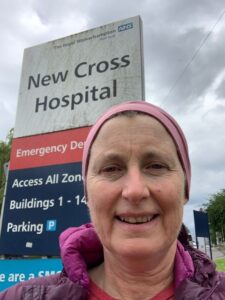
Ruth outside of hospital
Ruth contacted her GP surgery to try and get an appointment but, as it was nearly Christmas by then, found herself having to wait until January 2024.
“They refused to retest me until they’d seen until they got the official document from BUPA – they wouldn’t just let me have an appointment to tell them the results. In the end it wasted probably two weeks in getting a diagnosis.”
A new blood test was eventually taken and sent to Stoke Hospital. The next day her GP surgery called Ruth. She was sent for a bone marrow biopsy at New Cross Hospital in Wolverhampton and on 26th January 2024 was told had acute myeloid leukaemia (AML), with FLT3 mutation.
“Needless to say I was speechless. I was running on the Saturday and was diagnosed the week after. I had no symptoms and no idea that I had a life-threatening disease. I couldn’t believe it; my world was turned upside down. Telling family and friends was difficult and no one could believe it as I was so fit and healthy.
“I told my oncologist that I had so much to do this year and couldn’t be ill. I was also shocked that I would have to be admitted into hospital almost immediately, would remain for up to six weeks and could be off work for 12+ months. What I didn’t realise then was that it would be 2.5 years and counting.”
Four rounds of chemotherapy put Ruth into remission but she was told her best chance for avoiding relapse be a stem cell transplant, which she had on 3rd September 2024 at the Queen Elizabeth Hospital in Birmingham. The strongest match for donor cells was from an unusual source – umbilical cord blood.
Collected from the umbilical cord and placenta after childbirth, cord blood is rich in hematopoietic stem cells, which can develop into various types of blood cells. These stem cells are used in transplants to regenerate a patient’s bone marrow and immune system. The donation process is painless and safe for both mother and baby, as the blood is collected after the umbilical cord is cut.
“I’d never heard of cord blood donation. My donations were coming from Spain and the US. And there are only five hospitals in the UK that do it.”
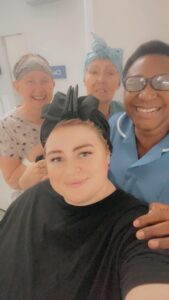
Ruth Wake’s friends for life and staff at hospital
After the transplant Ruth experienced painful graft vs host disease (GvHD) in her digestive system and was put on immunosuppressant drugs and steroids. From these she developed steroid-induced diabetes and was readmitted to hospital in January 2025 – thankfully this was only temporary.
“I thought this is great, this is my year, I’ve got through everything that’s been thrown at me.”
In June 2025 Ruth was well enough to go on a hill walking holiday and was considering going back to work. However a call from the hospital on 25th June changed everything.
“They wanted me back for more blood tests and then told me my AML was back. It was a big shock, as I had been feeling so well. I was also told because I’d relapsed in under 12 months, I couldn’t have a second transplant. I was put on Gilteritinib, which put me into remission. But they said it wouldn’t work for ever – after around nine months the only option would be palliative care. Initially as I was so fit and healthy at the time my consultant said she would try and put a special case to the NHS. However it soon became clear there were no exceptions and no appeal process.
“Even a convicted murderer gets a right of appeal and I get nothing. The decision was made by people who never even met me, they were just going on historical data that I subsequently found out had been drawn up in 2017. I also discovered that there was new research since that time indicating that second transplants had a higher chance of working than previously believed.”
In the past decade stem cell treatments have evolved significantly, risk assessments based on a wider range of factors are more sophisticated, and the evidence base for second transplants has grown. Crucially, many other countries including Germany, Sweden, Australia and Canada use this updated evidence and France has changed the threshold to six months. More information here A Second Chance at Life – Leukaemia UK
Fired up by the unfairness of the situation, not just for herself but others, Ruth decided to contact her local MP Gavin Williamson.
“I was told initially he didn’t have any appointments for three months – well I could have been dead by then. So I posted about it on a local Facebook group explaining the situation and asking people to help me by writing to him and telling him about me. Over 100 emails landed in his inbox and he saw me in two days! The story was also picked up by local BBC news who did a TV piece on me.
“My background is on interpreting new financial regulations for my bank and representing the business on various forums, sometimes internationally. I know how to read complex policy documents, I understand the language, I can present to people and I’m not afraid of it. So I treated my meeting with him like a business meeting, laid out all the documents. He said the best course of action would be to enter the ballot for an oral health question to Wes Streeting, who was Health Secretary at the time. His ballot entry was picked and the answer came back that they would look into it. Raising this awareness in parliament and through Sir Gavin’s team, together with behind the scenes work from Leukaemia UK, Anthony Nolan and DKMS resulted in an agreement that the policy needed reviewing.”
Despite this, Ruth had accepted nothing would change in time for her, so she started the process to secure funding from her company medical insurance to pay for a second transplant privately at the Royal Marsden in London.
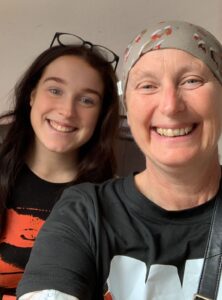
Ruth with her daughter Natasha
“I knew I still might not make it but I couldn’t accept there’s a chance I can and I couldn’t take it. I had to fight for my life. I was in remission again from the drugs by then and went to the appointment in my gym gear and the doctor said ‘gosh you look healthy’. I said ‘I am, too healthy to die’. He listened and took me seriously, and said ‘I agree with you, the criteria is outdated’. It was an emotional moment to be listened to like that.”
As well as being told the transplant and aftercare would cost £250k, it was explained to Ruth she would be denied all further NHS treatment if she had it done privately. She pushed ahead, went through more tests, and the private consultant put her case to the insurance company. In December they approved the treatment. She then waited to see if her employer would agree and was eventually given the good news they would. Time was against her as the nine-month window for the effectiveness of the gilteritinib was in February, and she had to have her transplant before then.
“It was incredibly stressful. If I hadn’t got the insurance funding I’d have had to launch a crowd-funder, and the clock was ticking, but thankfully eventually I got the green light. I can never thank my employer enough.”
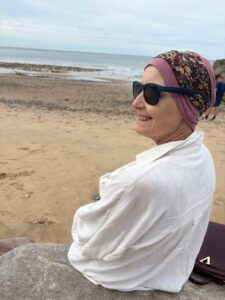
Ruth recovering from her second transplant
On 20th January 2025 Ruth had her second transplant at The London Clinic with donor cells from daughter Danielle, 20.
“It was very hard. I was in hospital nine weeks and had infections, peeling skin, terrible back pain and acid reflux which meant I couldn’t eat. I lost 10kg. Eventually my cells started to engraft and I was allowed to go home, although I still wasn’t well.”
Ruth’s care continues both in London, where she goes once a month for a consultation and major tests, and at the Queen Elizabeth Hospital in Birmingham, which agreed to give her weekly blood tests and emergency care. In May it was discovered that she still had a residual amount of leukaemia in her cells. She continues on gilteritinib and has had more donor lymphocyte infusions from her daughter and a blood transfusion.
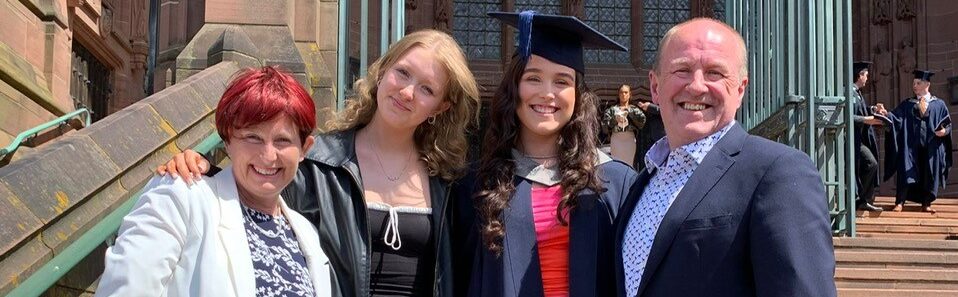
“It was disappointing – but I wasn’t as gutted as the first time because I knew there was a possibility, we know it’s not an exact science. It’s been tougher than I imagined but without it I believe I would have died in March. This way I get to celebrate my daughter’s 21st birthday and see her graduate and move my other daughter into her new home. What happens after that we will see.”
Ruth’s story, along with the experiences of other patients in similar situations, has driven Leukaemia UK to partner with Anthony Nolan and DKMS to launch a campaign to persuade the NHS to amend the policy .
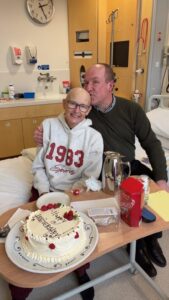
Ruth after her second transplant
“It would have been so easy to give up. But I’m not that type of person. I just started to question it, asked for a copy of the NHS commissioning rules and thought – this isn’t right.
“To be given the news you’ve relapsed is bad but then to find that decisions have been made on data that is way out of date and not reflective of today’s patient doesn’t make sense. I know there are no guarantees that my leukaemia won’t come back again but this gives me extended time with my family when there was no hope. I appreciate not everyone is as strong, as forthright and as lucky with the insurance as I have been, so I see it as my role to speak up for everyone. If I can leave this as a legacy it would make me so happy.”
Share your story
We want to help people tell and share the leukaemia stories that matter – stories like Ruth’s and stories like yours.
Related posts
18 October 2021
Leukaemia UK drives forward progress for leukaemia research through five new John Goldman Fellowships for 2021
Leukaemia UK announces five new John Goldman Fellows for 2021 to accelerate progress and stop the disease devastating lives.
15 February 2024
Vogue model who survived leukaemia as a child joins Leukaemia UK in calling for more donations for research to stop blood cancer ‘destroying childhoods’
Vogue model Saffron Vadher has joined Leukaemia UK on International Childhood Cancer Day (February 15th) in calling for more research into the blood cancer. Leukaemia is the most common type…
15 June 2018
Nick Boles’ Ambulatory Care Unit opening speech
An edited extract of the speech Nick Boles MP made at the official opening of the Leukaemia UK Ambulatory Care Unit.
21 June 2023
Prestigious jointly-funded fellowship could be catalyst for myeloma prevention
Dr Louise Ainley, University College London, has been awarded a Clinical Research Training Fellowship – jointly funded with the Medical Research Council. The three-year project is set to investigate which…