

03 Jun 2026
Rarest of the rare: Jonathan had a second stem cell transplant
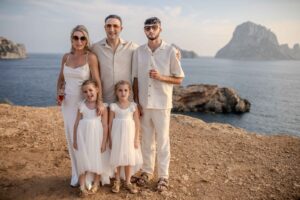
Having an exceptionally unusual leukaemia and being one of only a handful of people in the UK each year to undergo a second stem cell transplant puts Jonathan Blackston amongst the rarest of the rare in his leukaemia journey.
Jonathan was enjoying life with his partner (now wife) Samantha and three children in Salford, Manchester in late 2022. Fitness played a big part in his routine. The property business owner would train every day, including boxing, running and lifting weights.
But on a family holiday in Dubai Jonathan noticed his gums were a strange dark red/black colour. He was given antibiotics by a dentist, believing he had an infection. But more symptoms started cropping up. He lost his appetite and felt exhausted, and his wife noticed bruises on his body. Then one day he collapsed at home.
“I’d just got out the bath and was at the top of the stairs when I felt so weak,” said Jonathan, now 46. “Samantha rushed me to A&E where they told me I had sepsis and was a couple of days away from not being there. They took blood tests and then pumped me full of antibiotics and a blood transfusion. Within 24 hours they told me I had leukaemia.”
Jonathan was transferred to the haematology ward at Salford Royal Hospital.
Doctors at first thought he had acute myeloid leukaemia (AML). But after a bone marrow biopsy, on 14th November 2022 Jonathan was diagnosed with T/myeloid mixed phenotype acute leukaemia (T/M-PAL) (also referred to as T-lymphoid/myeloid mixed phenotype acute leukemia). This extremely rare and aggressive combination of acute forms of myeloid and T-lymphoid leukaemia accounts for less than 1% of all leukaemia cases.
“They treated my sepsis, which took about ten days, and then started me on FLAG (fludarabine, cytarabine, and G-CSF) chemotherapy. When that finished I was told it had 75% cleared my leukaemia but they needed to try something stronger, so the second round was FLAG-IDA (a more intensive treatment with idarubicin added in).
“The second one was definitely more gruelling and I had more side effects. I went down from 99kg to 79kg and looked emaciated. At that point the hospital got in touch with The Christie NHS Foundation Trust in Manchester, which is a specialist cancer treatment centre, to talk about me having a stem cell transplant.”
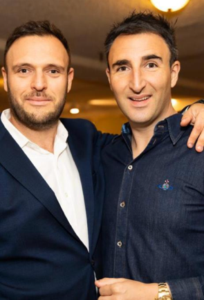
Jonathan with his brother David
Jonathan’s brother David, who lives in New York, was found to be a match as a donor. However further tests revealed he was anaemic and couldn’t donate at that point. A 10/10 match was then found with a 21-year-old donor in Israel. After one more round of FLAG chemotherapy, on 5th May 2023 Jonathan had his stem cell transplant at The Christie.
He spent a month in hospital recovering and then returned home.
“The first week I was back home I could barely walk up the stairs. But by the end of July I was back in the gym! Fortunately I have great people working in my business, so I could manage that with a couple of hours on my laptop each morning. I regained my strength after a few months and life was good.
“In November 2024 we went on a family holiday to New York to see my brother and I didn’t feel great. On two more holidays in Dubai and Disneyworld Florida I felt the same. But I recovered so didn’t think anything of it. In retrospect I can see now that if I kept my body in its usual routine it was fine, but if I put a strain on it like a long-haul flight it struggled.”
Jonathan continued with family life, work and his fitness routine. But in July 2025, just over two years after his transplant, he felt ill while doing a 10-mile run.
“I felt out of breath and not as strong as usual. I went to the GP and they took a blood test. I was actually at boxing the next day when The Christie rang me and said my bloods were all over the place and it looked like my leukaemia was back.
“I think this was the worst time. I was told I only had a 25% chance of being alive after four years. It really wasn’t easy.”
Jonathan was told he’d need another transplant. Data from NHS England shows that fewer than 20 people per year undergo a second stem cell transplant. Currently guidelines state they need to have relapsed more than 12 months after the first transplant in order to qualify. Patients must have also achieved complete remission and be clinically fit enough to undergo treatment.
This time the donor was to be Jonathan’s brother David. He had been identified as a 100 per cent match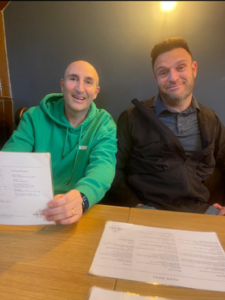 which is very unusual and only happens with in around 1 in 4 cases for siblings. David had been treating his previous anaemia with blood transfusions and they had worked.
After two more rounds of chemotherapy Jonathan was again in remission. David flew from New York to Manchester to donate his cells for his brother and on October 16th Jonathan had his transplant.
“We shared a pizza in the hospital room the night before, talking about everything that had happened and was happening. The next day they collected his cells and put them into me which was a surreal feeling.”
“It was truly an out-of-body experience,” said David. “From the very beginning, all I could think about was making sure my blood results were good enough so I could donate — right up until the day itself. Watching my cells being administered to my brother is something I’ll never be able to fully put into words. In that moment, I simply did what I know my brother would have done for me if the roles were reversed.
“Throughout everything, I always believed he could overcome this illness. More than anything, I wanted him to know he could rely on me completely, and that thought stayed with me every step of the way. I’ll forever be grateful for the incredible support from my family and friends, and for the amazing care and compassion shown by The Christie NHS Foundation Trust.”
Jonathan spent three weeks in hospital and then returned home. However after a week he was readmitted with a cough and was told he had pneumonia.
“They managed to get rid of that in just a week. I started to feel something was going on here with me and how very lucky I was. I had very little immune system but had got over pneumonia in a week. I’d had sepsis, a rare cancer, a relapse. In my lifetime I’ve also been stabbed and I survived the tsunami in Phuket in Thailand on Boxing Day 2004. You can throw a lot at me but somehow I am still here!
“But I didn’t take it for granted. I was going to build a bar in my home but I decided to give up drinking, take better care of myself and build a gym instead. I bought a treadmill and started walking every day, then jogging. By January 2025 I was running for 20 minutes.”
Jonathan’s leukaemia has been incredibly poignant for his family. The best friend of Jonathan’s father Leslie had had leukaemia in the 1980s. Fortunately his treatment at the Manchester Royal Infirmary (MRI), with a bone marrow transplant, was successful. Jonathan’s mum Shelley and her friend Shelly Gordon set up Leuka’s Aid in 1987 to fund improvements to the hospital facilities. Jonathan was in primary school at the time but remembers clearly how they raised over £500,000 (around £1.7million today).
“They’d hold black tie events and people like Princess Diana and Barry Manilow came. She did an amazing thing, and it was definitely a huge shock for her when I got leukaemia.”
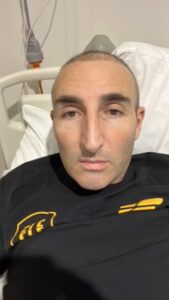
Jonathan during treatment
“At the time the MRI was only able to do one bone marrow transplant per patient at a time,” said Shelley. “The first £100,000 we raised paid for a new bone marrow transplant unit to be built whereby six transplants could be done. This was managed by Professor John Yin, who had previously worked alongside Dr Irving Delamore, and they both opened the unit with Sir Bobby Charlton and Ken Dodd.
“I never in my wildest dreams thought that 40 years later Jonathan would develop this disease and that his younger brother David would get to save his life. A miracle of all miracles – Jonathan is that miracle – he has such determination and is driven! It seems quite ironic that our work in raising funds eventually was put into research and could possibly have saved Jonathan’s life, I’ll actually never know. At that time the MRI were researching into stem cell transplants and various leukaemias. Life can be cruel but now we’ve got smiles on our faces and are enjoying our lives together as a family.”
“My latest results show that 99.5% of my blood cells are the same as my brother’s,” said Jonathan.
“Although I know how incredibly lucky I am physically, it did change me mentally. I have lived an incredibly fortunate, happy life. I realised when I was really ill that if you look out of a window and you’ve only really seen brightness, you don’t quite know what darkness is so you don’t dwell in it. That’s what’s helped me. I’ve been able to keep positive all the way through and it’s carried me. The only time I get really sad is when I see how it’s affected my mum and also my amazing wife. Fortunately my little girls are too small although my son who’s older has seen me through it. But we’re all just keeping cracking on. And I’m so lucky to have my brother, who saved my life. We were always close but we’re now effectively the same person!
“The whole experience has also made me want to continue my mum’s work and raise more awareness and support research into leukaemia, particularly the rarer types like mine. I’ve been so lucky and we need better treatments with less side effects so more people can benefit.”
Share your story
We want to help people tell and share the leukaemia stories that matter – stories like Jonathan’s and stories like yours.
Related posts
3 July 2025
Together we are changing lives – Here’s how your support is making it happen
At this point in our advocacy journey, we wanted to share an update to you, our supporters, on everything we’ve achieved so far and what’s next as we continue to…
9 November 2017
Leukaemia UK is the new name for the ‘Elimination of Leukaemia Fund’
We are a leading charity making a difference to families affected by leukaemia, lymphoma, myeloma and other blood cancers.
11 March 2022
Inquiry highlights the impact of COVID-19 on blood cancer services
A new report has recently been published, following an inquiry by the All-Party Parliamentary Group (APPG) on Blood Cancer and the APPG on Stem Cell Transplantation and Advanced Cellular Therapies, on the impact of Covid-19 on blood cancer services in the UK.
2 October 2023
Three leading charities collaborate to fight childhood cancers
New Partnership we3can to fund research into three most common childhood cancers Today (2nd October 2023), three leading cancer charities have launched a new collaboration in order to improve the…