
28 Apr 2026
“Strangely enough, leukaemia actually gave me so many positives.”
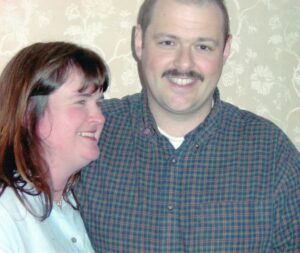
Ian and Tracy at their engagement party during treatment
Supporting a partner through leukaemia is tough on any relationship. Ian Hayes had been with his girlfriend, Tracy, for less than a year before he was told he had blood cancer. But the two years of his treatment and recovery brought them closer together and changed the course of Ian’s life.
Ian was working for the local authority in Leicestershire as a Countryside Ranger in 2003 when he found himself feeling much more tired than usual.
“It was a physical job, working outside all the time, and I started to feel run down,” said Ian, now 55, who lives in Plymouth and works for Natural England. “I had bruising on my body, but I was living with Tracy by then, and she had four children, so I thought it was just the rough and tumble of kids and home life. But then I started to find black spots in my mouth, which, after my diagnosis, I realised, of course, were also bruises. Tracy gently pushed me to go to the GP, and I got an appointment on January 8th, 2004.
“They took a blood test and said they’d get back to me. Later that day, I got a call from my GP telling me to pack a bag and go straight to the haematology department in Leicester Royal Infirmary and prepare to be admitted. Tracy drove me there.”
Upon arrival, Ian was told he might have leukaemia and given more tests. The next day, it was confirmed he had B-cell acute lymphoblastic leukaemia (ALL). Ian was 33 at the time, and ALL is a rare type of leukaemia that is far more common in children – 60% of cases are in under-25s.
“That was my first night ever staying in a hospital. It took quite a while to sink in. I felt scared and didn’t realise the enormity of it all. But I knew I was in the right place and that there were people there who were going to help me.”
Ian was given platelets and started the chemotherapy drug Vincristine the next day. It was the beginning of what turned out to be five weeks of treatment as an inpatient.
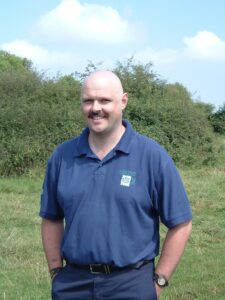
Ian during treatment
“I was given Vincristine every Friday along with regular blood tests. My veins were not very easy to find, so they decided I should have a Hickman line put in to help with giving treatment and taking bloods.
“This was all part of the UK ALL 12 trial, which Dr Ann Hunter had told me almost immediately that they wanted me to go on. They gave me a pamphlet that laid out all the treatment across the first year and then the maintenance year after that.
“I went through any number of emotions while in the hospital, from determination that I was going to beat this, to being very fearful of never getting out. Through it all, Tracy supported me tremendously. I couldn’t have got through it without her. She was always there, even when I was receiving chemo, or holding my hand as I had a bone marrow biopsy. She was also trying to hold down a part-time job and raise four children, and I have no idea how she did it.
“The treatment made me very tired, and I lost my hair, although, unusually, it didn’t affect my beard at all – one of the doctors said he wanted to write a paper on me because of that! I chose to shave it off until my hair grew back. I also didn’t suffer too much from sickness apart from with one particular drug, but they’d always give me anti-sickness medication with that, and I was fine.
“At one point, towards the end of the first year on the trial, they said I had a choice. Did I want a stem cell transplant – for which I’d donated my own cells early in the process – or did I want to carry on with chemotherapy? Or did I want the computer to choose? We couldn’t decide, so we said let the computer do the work, and it said that I was to stay on chemo, so that’s what I did.”
Ian went home after five weeks, although he spent the rest of the first year with weekly outpatient appointments for treatments and tests.
“I didn’t work for nearly two years. The appointments and treatments became my job. Strangely, I felt much better right at the start and actually continued to pretty much feel like that. Towards the end, they told me I’d gone into remission at the end of the first five weeks, which could explain that, and their task had just been to keep me at that point, which they did. We had a couple of close calls, when it was thought I’d need a bone marrow transplant, which was scary, as I am an only child, with elderly parents, reliant on the kindness of people prepared to donate their bone marrow. Luckily, I have never relapsed, although every check-up appointment for years came with some anxiety.”
Tracy’s incredible support for Ian during his treatment, coupled with the amount of time he’d had in hospital thinking about his future, led to a big decision.
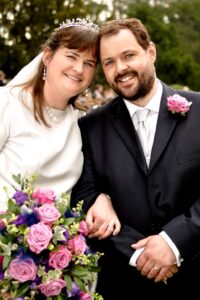
Ian and Tracy on their wedding day
“I’d always said I didn’t want to get married and didn’t want children. And it was something we’d never really talked about. But Tracy had been my rock throughout my treatment, being by my side as well as keeping the house, children and her job going. She’s amazing, and it made me realise she was a keeper! We went to visit her parents in Bournemouth in May 2004, and I proposed on the beach.
“We planned our wedding for Saturday, 19 March 2005. I had a routine clinic appointment on the Tuesday before. They found something they weren’t too happy with and broke the awful news to me that I needed a bone marrow biopsy to check if I was still in remission, which they did the day before our wedding. Thankfully, friends came to our rescue, collecting the cake and flowers, and helping decorate the community hall where we held our reception.
“At that appointment, they told me to prepare for a bone marrow transplant and that I needed to come into the hospital. I told them I was getting married the next day and then spending a week in the Lake District on honeymoon! They reluctantly said I could go, provided Tracy kept a close eye on me – she promised Dr Hunter she’d drive me straight back if she was concerned – and I did some steroid injections every day, which gave me sore legs throughout all our walks in the Lakes. We duly showed up at the hospital the following Monday only to be told it was some kind of glitch in the readings, and I could go back home again!”
Ian returned to work in January 2006 but had spent time in the hospital thinking about a career change. With Tracy’s encouragement, he went back to university to study a BSc in Applied Conservation Biology for three years, followed by an MSc in Habitat Management and Conservation. He then embarked on a career in ecological consultancy. At the end of 2012, the couple moved to Cumbria for new jobs, spending 10 years there before Tracy secured a new role at a university in Plymouth, which saw them move to Devon in September 2022.
“My final contact with the hospital was at an outpatient appointment in 2011, when I was told I no longer needed to come back, unless I became unwell. Since then, I have been free of leukaemia. I don’t think I have any long-term side effects, and I always count myself as very lucky. I know I got off lightly compared to others.
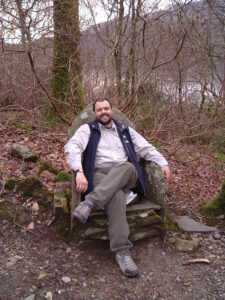
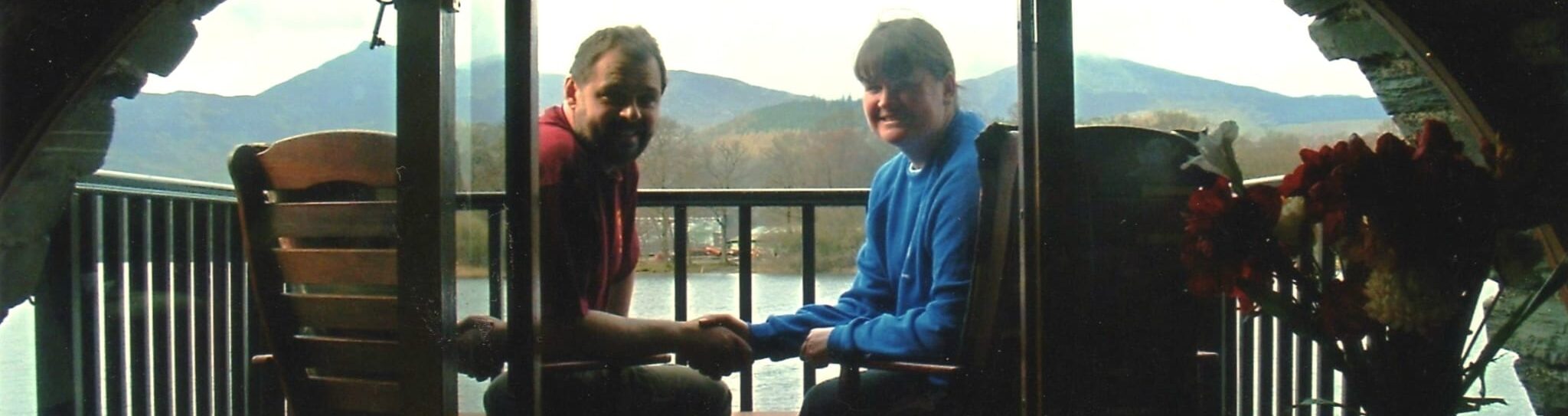
Ian on his honeymoon
“What I went through created a strong bond of shared experiences and emotions. Tracy went through almost the same as I did. We do occasionally talk about it, as there were some very tough times, but also some funnier moments. I was with a group of other men on the ward, and as we all started to feel better, we’d enjoy wandering off for walks, missing our treatments and getting into lots of trouble! And I will never forget the food, it was appalling. I was losing so much weight, they brought in a nutritionist, and I said it’s nothing to do with the treatment, it’s being given the worst soggy chips I’ve ever encountered! I also suffered from strange twitchy legs, which could only be relieved by lying upside down in my bed with my feet up the wall, much to the confusion of the doctors, who brought in a psychiatrist.
“Strangely enough, leukaemia actually gave me so many positives. It cemented my relationship and changed my life. I learnt to value the new family I gained. The children are all grown up now, and I’m enjoying being a grandfather. I hope that I can remain free of the cancer. It made me stop and think about life moving forward and the possibilities of new directions.”
Share your story
We want to help people tell and share the leukaemia stories that matter – stories like Ian’s and stories like yours.
Related posts
12 December 2022
Widespread coverage of new leukaemia therapy shows promise in first trial patient
As you may have seen in the news over the weekend, a clinical trial investigating a new leukaemia treatment has shown promising results. As part of the trial, funded by…
18 May 2026
A decade on: Dr Javier Redondo Muñoz continues to shape the future of Leukaemia research
Ten years after joining the second cohort of Leukaemia UK’s John Goldman Fellowships (JGF), Dr Javier Redondo Muñoz is continuing to shape the future of leukaemia research. Now leading his own team in…
19 June 2023
Leukaemia UK research paves the way for personalised lymphoma treatment
Despite promising trials, standard treatment for diffuse large B-cell lymphoma (DLBCL) hasn’t changed in a decade. New treatment strategies for this type of blood cancer are urgently needed. Could the…
13 March 2024
Leukaemia UK launches manifesto to demand better for those affected by leukaemia
Leukaemia UK has today launched its manifesto to demand better for those affected by leukaemia. The manifesto calls on the next government to save and improve the lives of those…