
25 Nov 2026
“I just knew she had blood cancer”
Ellen Keohane-McGrath has her eyes firmly fixed on the future. Currently studying English, Spanish and sport at A level, the 17-year-old, who lives in Ramsgate in Kent is focused on going to Cardiff University next year to take an English degree.
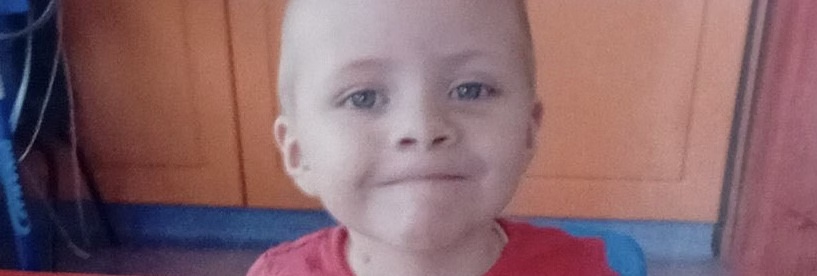
For Ellen’s mum Julie it will be an emotional moment. Because when her daughter was just two years old she was diagnosed with a very rare type of leukaemia. After two years of gruelling treatment, she made a full recovery and is now about to start life as an adult.
It was August 2011 when Julie first noticed something was wrong with Ellen.
“We lived in Nottingham at the time but had been on a trip to see my parents in Kent and had been to the beach,” said Julie, 39, who works as a teacher. “Ellen was in her swimming costume and I noticed bruises in funny places like on her hip. Then a couple of days later when I was driving and she was in the back of the car, I looked in the rear-view mirror and noticed she had a slow nose bleed. I said to her dad, my husband at the time, ‘it’s Sunday but I’m going to get her to the doctor first thing tomorrow’.
“What was very strange was that I just knew she had blood cancer, even then. I didn’t know much about it but my instinct was telling me. We were living with my mother-in-law and she asked me later that evening what I was worried about and I said ‘I think she’s got leukaemia’.”
The GP checked Ellen’s glands and said she seemed to be OK but Julie insisted that she had a blood test. They went to A&E at the Queen’s Medical Centre in Nottingham.
“They handed us a ticket and we were 28th in line. It took us several hours to get seen. When we got home I decided to take Ellen and her brother Joseph to the park round the corner as they’d been cooped up in the waiting room for so long. While we were out my mother-in-law rang me and said our doctor had come to the front door wanting to see us. I ran back up the road and said to them ‘she’s got leukaemia hasn’t she?’. All they said was that her platelet count was down to 3 – it should have been 200-450 x 10 – and she needed an immediate blood transfusion.”
The family drove straight back to the hospital where they were taken to the children’s oncology ward. The next day 25th August 2011 it was confirmed Ellen had mixed phenotype leukaemia (MPAL) – a combination of acute myeloid leukaemia (AML) and acute lymphoblastic leukaemia (ALL).
Less than 5% of cases of acute leukaemia in children are MPAL. In adults this figure rises to between 1 and 3 in every 100 adults over the age of 18. Several chemotherapy approaches have been used to treat MPAL, including ALL-directed, AML-directed and hybrid ALL/AML regimens, such as FLAG-IDA combined with vincristine and prednisone, and hyper-CVAD. However, the optimal treatment strategy remains controversial, with marked differences between adult and paediatric treatment approaches. Due to the rarity of the disease and complexity, standard protocols for MPAL are still being developed.
“I was about to start a job as head of PE at a school in Nottingham and had to phone and say that it wasn’t going to happen. My ex-husband was an assistant headteacher who lived in London during the week. His mother helped us a great deal although sadly she was in hospital a few weeks later having treatment for bowel cancer. Fortunately she pulled through. My grandparents were also very supportive throughout all the treatment.
“Our first stay in hospital was six months, then it was back and forth for all the chemotherapy and also periods as an in-patient when her temperature spiked.
“I remember bits and pieces,” says Ellen. “I remember the playroom, and the play coordinator Sam. I just remember it didn’t feel like I was being treated for cancer. It felt more fun than that. Although I have one bad memory when they were trying to put a feeding tube in me and mum had popped out and wasn’t in the room. I had a meltdown and pulled it out, she came back and it was on the floor. I remember lumbar punctures as well but the doctors used to say to me ‘what’s your favourite milkshake?’ and I’d always say ‘chocolate’ and they’d say well that’s what’s going into you right now.
“I remember my mum remaining strong despite the devastating diagnosis. She was determined in helping me get through this. Mum said the treatment was efficient and they explained it clearly, which helped, and the support from hospital staff was incredible.”
“She was always a calm little girl, and her speech was very good for her age so the doctors could really talk to her,” adds Julie. “Her brother Joseph was two years older and has always been a livewire. Sometimes I had no one to look after him so he would come on to the ward with me and sleep on a camp bed while I slept in the bed with Ellen. He would watch his films and go up and down the corridor talking to people! He says now he remembers seeing all the sick children and feeling really sad.”
Ellen’s first chemotherapy regime, which targeted her AML, lasted six months and she responded well. She was then given a less aggressive treatment for the ALL. After that she was allowed home for maintenance treatment, and was well enough to start nursery and pre-school aged four. After two years of treatment she told she was in remission, and would just need regular blood tests. Four years later the family moved from Nottingham to Kent and last year when she turned 17, doctors at the Royal Marsden Hospital in London, who had taken over her care, officially discharged her.
“The experience was difficult not only for me but for my family too, particularly for my older brother who had just started school at the time of my diagnosis,” said Ellen. “My mum was amazing in supporting both of us with her undying determination and a positive mindset – or as positive as it could have been considering the circumstances. We also had unwavering support from charities such as CLIC Sergent (now Young Lives vs Cancer) and When You Wish Upon a Star.
“Even now I sort of forget that I had cancer. Most days I don’t even really think about it. It hasn’t held me back. I’ve always been quite active, playing netball and running. I’m so grateful more than anything because it was such a serious situation.”
To mark her gratitude and to celebrate her 18th year, Ellen is setting herself an incredible fundraising challenge for Leukaemia UK by running the 2027 London Landmarks half marathon in 2027.
Ellen Keohane-McGrath is fundraising for Leukaemia UK
“After my experience with leukaemia, I hope to help others and their families as much as I can by raising money, hopefully making their devastating situations somewhat manageable.”
“I still find it hard to talk about,” adds Julie. “I remember looking out of the hospital window to the university which is right next door. It was Sunday afternoon and I could see everyone’s lives just going on as normal and I thought we’re here and we just don’t know. I remember waiting for the results of the first bone marrow biopsy after she’d been through all that treatment and feeling physically sick. The relief is impossible to describe.
“I want to say to parents now who see strange symptoms in their children – trust your gut instinct and don’t ignore them. I was determined we were going to get that blood test and I even though the GP never mentioned leukaemia I brought it up and asked about it. But there is hope. Ellen is a determined young woman now – determined to get on with her life, and I’m so proud of her.”
Share your story
We want to help people tell and share the leukaemia stories that matter – stories like Ellen’s and stories like yours.
8 July 2025
The first ever leukaemia-dedicated pathway to improve diagnosis, treatment and care
The Best Practice Timed Pathway We’re delighted to share that Leukaemia UK, in partnership with Lymphoma Action and Myeloma UK, is working with the NHS England Cancer programme team to…
5 March 2025
Leukaemia UK chosen to be featured charity partner of Scrap Car Comparison
Leukaemia UK will be the featured charity partner of Scrap Car Comparison’s ‘Donate a Car’ scheme this March. The scheme will help raise money to stop leukaemia devastating lives by…
15 June 2018
Nick Boles’ Ambulatory Care Unit opening speech
An edited extract of the speech Nick Boles MP made at the official opening of the Leukaemia UK Ambulatory Care Unit.
1 August 2022
A research breakthrough targets cancer over healthy tissue, bringing possibility of a new treatment option for most deadly type of leukaemia
A new scientific paper published on 22nd June in Science Translational Medicine, announced a breakthrough by Leukaemia UK-funded scientist Dr William Grey that could lead to a vital new treatment option for…