
01 Sep 2026
Phil Carrick: The Yorkshire Captain Who Died at 47
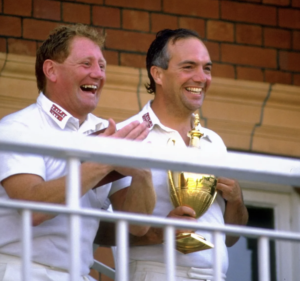
Phil Carrick with David Bairstow
Yorkshire Cricket Captain Phil Carrick was only in his 40s when he lost his life to leukaemia. In the 26 years since then, treatment for his type of the blood cancer – chronic lymphocytic leukaemia (CLL) – has dramatically improved, thanks to the power of research.
From a five-year survival rate around the year 2000 of between 70 and 75%, now over 80% of people survive for that period of time. Bruton’s tyrosine kinase (BTK) inhibitors were introduced in 2014, transforming treatment with oral targeted therapies that are better tolerated than chemotherapy. Ibrutinib was followed by venetoclax and then in the 2020s the next generation, including personalised treatments based on genetic features that now help clinicians assess prognosis and guide treatment choices.
Here Phil’s daughter Emma, 46, who lives in North Yorkshire and works in outdoor advertising, remembers her father.
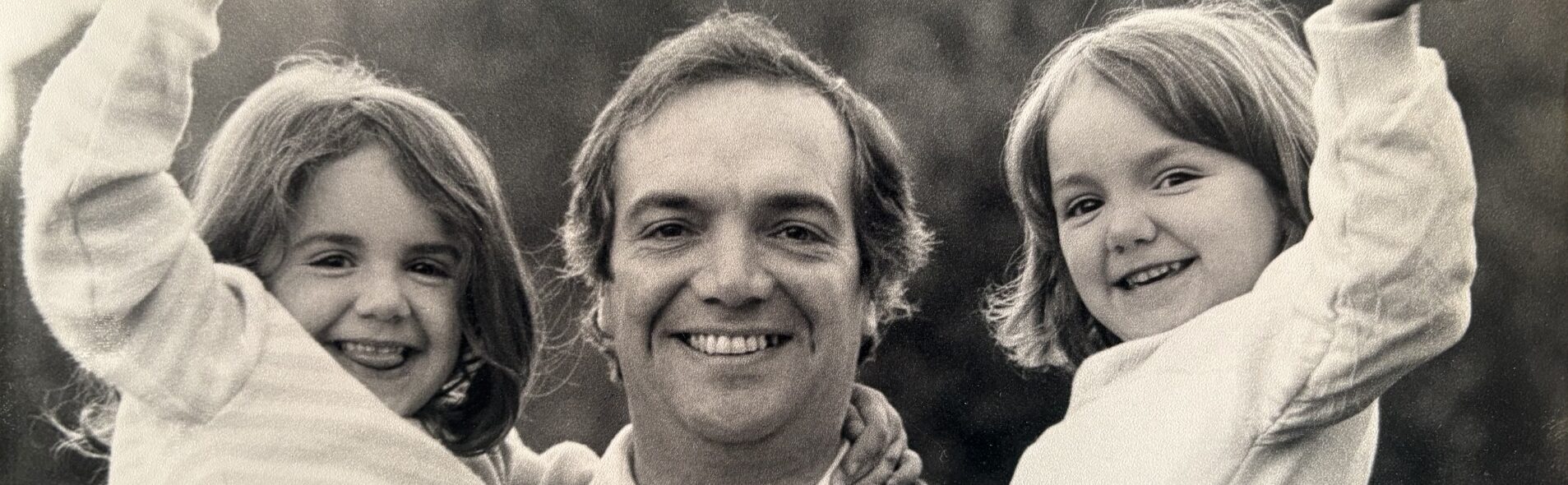
“To many people, my dad was a Yorkshire cricketing hero. As captain, he led Yorkshire County Cricket Club to victory in the 1987 Benson & Hedges Cup, becoming one of only a handful of Yorkshire captains to lift a major trophy. He was admired for his leadership, determination and the respect he commanded throughout the game.
“But to my sister and me, he was simply Dad. He was kind, funny and an incredible father. Together, he and my mum Ellie built a loving family home where we always felt safe, supported and encouraged. Looking back now, I realise just how fortunate we were to have him. Despite all his achievements, I know the role he was proudest of was being a husband to my mum and a dad to my sister and I.
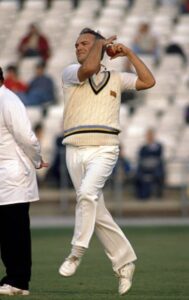
Phil playing cricket
“He retired from playing at the age of 40 and was on the path to becoming a First Class Umpire with the English Cricket Board. But in 1997 when he was about 43, the first signs of his CLL appeared. One day he took off his shirt to show my mum some unusual marks across his torso and arms, which she described as looking like “lip marks”. Concerned, she encouraged him to visit our family GP, who arranged blood tests. Shortly afterwards, the practice telephoned asking Dad to come in immediately because they suspected leukaemia. A few days later he was told it was just a blood infection and advised to carry on as normal because, at that stage, he appeared relatively well.
“But over the following months, his health gradually deteriorated. He became increasingly tired, slept much more than usual and suffered repeated infections like colds and cold sores that wouldn’t clear up. One day, after developing red marks on his wrist, he was admitted to hospital near where we lived in Keighley for further investigations. It was then that he was diagnosed with CLL and placed under the care of the wonderful Dr Anne Cuthbert at Airedale General Hospital.
“Dad received tablet chemotherapy and regular blood and platelet transfusions. He was very upbeat, but I think now he was probably in denial. He was such a ‘cup half full’ kind of a person, he thought he was going to get better. I’m sure underneath it all he was scared, but because of us, his family, he didn’t want that mask to slip and for us to be worried.
“Despite the doctors’ best efforts, he never really regained his health and spent increasing amounts of time in hospital. I was away at university in Lincoln studying journalism while a lot of this was happening. One day about three months before he died Mum rang me and said, “you need to get home as soon as possible”. I went to the hospital and he was in his room sitting up and said, “what are you doing here?” Panic hit his face. I just brushed it off, telling him I had some time off and wanted to surprise him. But I think at that point for him something shifted.
“Throughout Dad’s illness, my mum never left his side. My sister Pippa was in her final year of sixth form studying for her A-levels and I was away at uni. In that
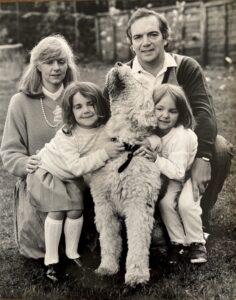
Phil’s family
relatively short period of time, our lives changed completely. Mum became Dad’s greatest advocate, supporting him through countless hospital appointments, blood transfusions and treatments, whilst remaining a constant source of strength and reassurance for my sister and I. She supported the man she loved whilst doing everything she could to help us navigate the most frightening time of our lives. She wasn’t just caring for Dad; she was holding our entire family together. Her resilience, selflessness and unwavering love were extraordinary, and my sister and I will always be grateful for everything she did for all of us. I honestly don’t know how she found the strength to do it.”
“For someone who had spent his life as a professional sportsman, seeing Dad become so unwell felt incredibly cruel. I still remember Dr Anne Cuthbert explaining that, because Dad was so young and fit, his overall health put him in a stronger position to cope with the disease and its treatment. At that time, CLL was largely regarded as an ‘older person’s leukaemia’ and there were very few treatment options available for someone of his age.”
In the UK each year, 4,720 people are diagnosed with CLL. It’s the most common type of leukaemia in adults – 38% of cases. 56% of all new cases are diagnosed in people aged 70 years or over.
“Despite everything he was facing, Dad continued chatting, smiling and trying to protect those around him, even when he must have known how seriously ill he had become. Former teammates, friends and colleagues came to visit him in hospital, a testament to the respect and affection so many people had for him.
“Dad fought his illness with incredible courage but sadly passed away in January 2000, aged just 47, with Mum, myself and Pippa by his side. It was my sister’s 18th birthday.
“His funeral at Bradford Cathedral was packed with more than 1,000 people, with many left standing because there was simply no room inside. Traffic in Bradford city centre had to be stopped. One of the speakers described Dad as a ”superstar.” He was, and still is, to so many people who remember him.
“I was just 19 years old when I stood in front of that congregation to deliver a reading. It remains one of the hardest things I have ever done. Whilst so many people were saying goodbye to a cricketer they admired, I was saying goodbye to my dad. Even now, all these years later, I can still picture looking across the cathedral and seeing just how many lives he had touched.”
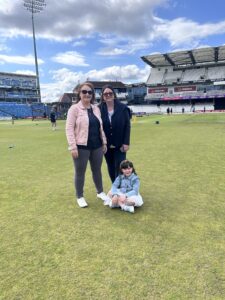
Emma and her sister at their dad’s resting ground in Headingley
Phil’s ashes are buried under mid-wicket at Headingley, just as he had requested.
“More than 26 years later, we all still speak about Dad with the same love and pride. His memory has never faded from our family, and neither has our gratitude for the care he received from Dr Anne Cuthbert and everyone who looked after him.
“Today, the outlook for people diagnosed with CLL has been transformed. I know people who were diagnosed at a similar age to Dad who are living full, active lives because of the extraordinary advances in research and treatment. Hearing those stories is genuinely wonderful, although there will always be a small part of me that wishes my dad had been born a generation later and had the opportunity to benefit from those new treatments. Every breakthrough means another family has more birthdays, more Christmases and more ordinary moments together that become extraordinary when time is uncertain.
“Although my daughter, Poppy, never had the opportunity to meet her grandad, she knows him through the stories we’ve shared. She talks about him often and is incredibly proud of everything he achieved, and has been to ‘visit Grandad’ on the pitch at Headingly. She’s only nine but has developed a real love of cricket and is already showing great promise. I have no doubt Dad would have been her biggest supporter and cheerleader.
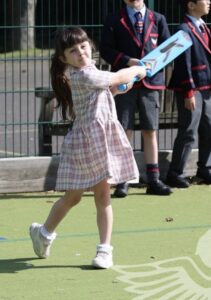
Phil’s granddaughter Poppy
“If sharing Dad’s story helps even one family facing a leukaemia diagnosis feel more hopeful about the future, then telling it is one of the most important things I can do in his memory. That is why my family and I wholeheartedly support the work of Leukaemia UK.
“Dad may not have lived long enough to see the extraordinary advances in leukaemia treatment or to meet his granddaughter, but his legacy lives on in the family he adored, in the lives he touched, and in the hope that continued research will mean more families are given the precious gift of time together.”
Share your story
We want to help people tell and share the leukaemia stories that matter – stories like Phil’s and stories like yours.
Related posts
30 January 2025
“Leukaemia changes everyone’s life.”: Chris Corbin OBE announced as a Leukaemia UK patron
The renowned restauranteur Chris Corbin OBE has been announced as a patron for blood cancer charity Leukaemia UK. Coinciding with the 30th anniversary of the stem cell transplant which saved…
15 June 2018
MP opens Leukaemia UK Ambulatory Care Unit
A unit funded by Leukaemia UK which allows people with blood cancer to have stem cell transplants as out-patients has been officially opened by its first patient, Nick Boles MP
29 July 2026
Research Blog: A new target for paediatric AML
In May this year one of our Leukaemia UK funded John Goldman Fellows, Dr Noelia Che, published a new paper along with her colleagues: MCL1 inhibition to enhance the efficacy…
2 October 2023
Three leading charities collaborate to fight childhood cancers
New Partnership we3can to fund research into three most common childhood cancers Today (2nd October 2023), three leading cancer charities have launched a new collaboration in order to improve the…