Scientists develop a new type of treatment that could open the door to new options for aggressive blood cancers

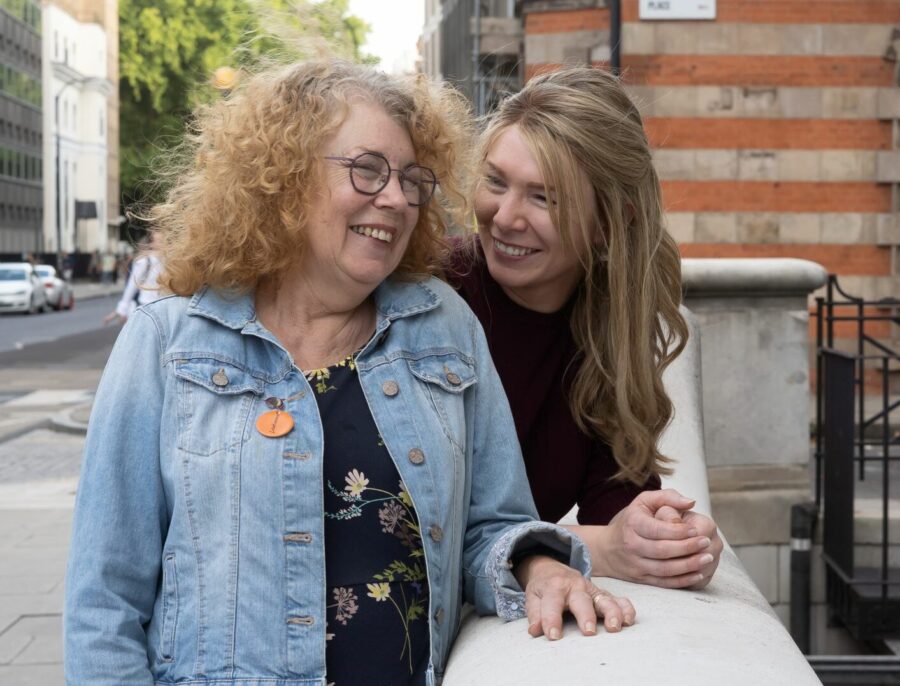
“It’s like a molecular tattoo that you can use to develop new cancer treatments” – Prof. Konstantinos Tzelepis
Research is rarely a straightforward journey. It takes time, determination and persistence to navigate setbacks, with each challenge offering new insights that help move science forward. But every so often, that hard work leads to a breakthrough worth celebrating, one that brings us a step closer to better treatments and new hope for people living with leukaemia.
In a paper published today, Leukaemia UK researchers share an exciting breakthrough: they have identified and developed a compound that can block the growth of leukaemia cells, helping to prevent the cancer from growing and surviving. This is particularly encouraging for people affected by acute myeloid leukaemia (AML), a type of blood cancer that can be especially difficult to treat. While more research is needed, these findings represent a promising step towards developing new ways to tackle the disease.
The protein METTL1 is part of a normal biological process in the human body that helps cells read their temporary instructions copied from DNA, called RNA and make the proteins they need. Part of the METTL1 pathway results in small chemical modifications to be made to certain RNA molecules. More specifically, METTL1 works with another protein, WDR4, to add small chemical modifications to certain RNA molecules. These modifications help cells read their genetic instructions efficiently and accurately. When this process goes wrong, e.g. through cancer causing mutations, the wrong amount or pattern of modification can be added to RNA, potentially changing how cells make proteins and, in diseases such as leukaemia, helping cancer cells grow and survive.
One way of thinking about the METTL1 pathway is as a molecular “tattoo”. Part of the role of METTL1 is to add chemical ‘tags’ to RNA, creating a distinctive molecular signature that researchers can detect and study. Importantly, similar METTL1-related signatures can be found across different types of aggressive cancers, including leukaemia such as acute myeloid leukaemia (AML). This suggests that cancers that may look very different can share underlying biological features – recognisable through their molecular “tattoo”.
By recognising a common METTL1-related signature across cancers, the ‘molecular tattoo’, researchers may be able to identify shared vulnerabilities and develop treatments that target a fundamental process cancer cells depend on, rather than focusing only on where the cancer occurs.
This is precisely what Prof Tzelepis and Dr Yankova have demonstrated through their research, funded through
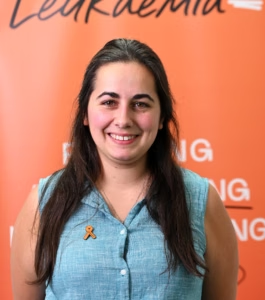
Leukaemia UK’s John Goldman Fellow Follow-up Fund and John Goldman Fellow grants respectively, alongside collaborators including Dr Oliver Rausch, Dr Alexandra Sapetschnig and Dr Beth Thomas.
In their recent Nature publication, they describe their successful work on identifying and testing a first of its kind inhibitor of METTL1 named STM9005.
In leukaemia, cancer cells need to produce large amounts of protein to support their rapid growth and survival. Changes in the METTL1 pathway may help these cells do this more efficiently, potentially giving them an advantage over healthy cells. This makes METTL1 an interesting potential target for treatment.
 Prof Tzelepis and his colleagues describe in the paper their process of identifying and testing STM9005 – which is shown to be a highly selective and potent inhibitor. This work has the potential to impact a large number of therapy areas. The increased activity of METTL1 and its activity has been linked to numerous processes including aggressive haematological such as AML and solid cancers such as melanoma, glioblastoma, liver and lung cancers.
The research team tested about 250,000 different compounds in order to identify STM9005 as the most suitable candidate. STM9005 has undergone extensive testing to understand exactly how it works and to confirm that it has the properties the researchers expected. The identification of STM9005 was followed by using it to treat several cancer cell models which showed that STM9005 blocks cell growth which causes a knock-on effect on the ability of the cancer to spread and survive.
This groundbreaking work and the results from the testing in living models shows, in scientific terms a strong proof-of-concept, which means there is convincing early evidence that the scientific approach works and could potentially be developed further for clinical evaluation.
Leukaemia UK is proud to have funded research that has not only identified a new biological signature but has also helped pave the way towards a potential new treatment. The compound identified by the researchers shows promise as a novel therapy, although much more testing is needed to understand how well it works and whether it could ultimately be safe for use in humans. Even at this early stage, the findings provide an important blueprint for further research and a foundation from which future treatments could be developed.
Read the full paper: Pharmacological inhibition of METTL1 as a therapy against solid and blood cancers