
26 Feb 2026
Research Blog: When donor cells attack – understanding GvHD
Many people are familiar with the idea of organ rejection, where the body’s immune system attacks a donated organ such as a kidney.
After a stem cell (bone marrow) transplant, a similar process can occur – but in reverse. This complication is called graft-versus-host disease (GvHD).
GvHD can occur after an allogeneic stem cell transplant (1), which is when stem cells are donated by another person. This type of transplant is a routine and often lifesaving treatment for many blood cancers, including leukaemia and lymphoma (2).
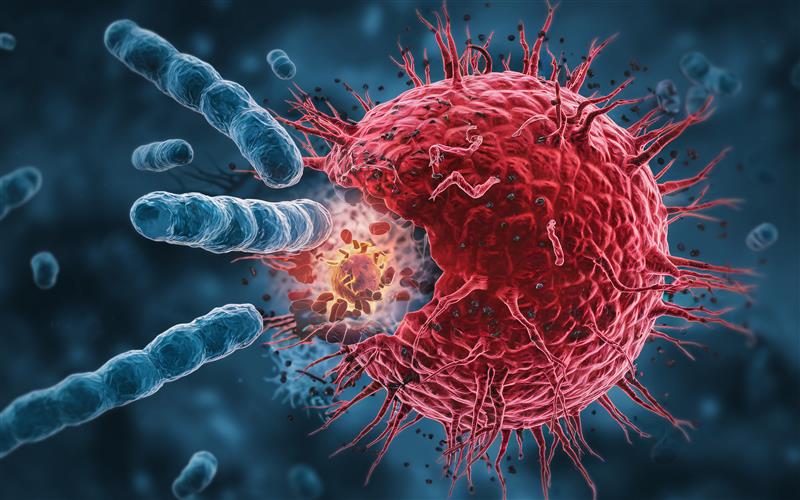
Instead of the patient’s immune system attacking donated tissue, immune cells from the donor recognise the patient’s body as “foreign” and begin to attack it.
What happens during an allogeneic stem cell transplant?
As leukaemia is a blood cancer of the white blood cells (which originate in the bone marrow) the aim of an allogeneic stem cell transplant is to replace these faulty white blood cells and stem cells – which form the immune system – with healthy cells from a donor. Before the transplant, the patient receives high-dose chemotherapy, sometimes combined with radiotherapy. This aims to remove as much as possible of the cancer-causing cells e.g. leukaemia stem cells, as possible; this also gives the donor cells the best chance to settle and grow (3). Once this preparation is complete, healthy blood-forming stem cells are collected from a matched donor and infused into the patient’s bloodstream, much like a blood transfusion.
These donated stem cells travel to the bone marrow, where they begin to engraft and produce new blood cells – including white blood cells that form a new immune system. This new immune system is vital. It protects the patient from infections and can also help destroy any remaining leukaemia cells. This beneficial effect is known as the graft-versus-leukaemia (or graft-versus-tumour) effect.
Why does graft-versus-host disease happen?
The job of the immune system is to protect the body from infections and cancerous cells. It does this by looking for and acting against anything in the body which seems ‘out of the ordinary’.
After a stem cell transplant the patient’s immune system has been replaced by an immune system based on the donor’s cells. All cells have different markers on their surface, called human leukocyte antigens (HLA). Our immune system constantly checks these markers to see what belongs in the body and what does not. GvHD occurs because the donor immune cells are not identical to the patient’s own cells and so they go into attack mode (4).
Reducing the risk of GvHD
To reduce the risk of GvHD, transplant teams carefully select donors using a process called tissue typing. Tissue typing looks at a set of HLA genes inherited from your parents. These genes act like an immune “barcode” – which can be read by the immune system. The closer the match between donor and patient, the lower the risk of complications such as GvHD.
- Brothers and sisters have the highest chance of being a close match
- If no family match is available, doctors search international donor registries
- Even with an excellent match, GvHD can still occur, but the risk is lower
In short the two major steps taken to reduce the likelihood of GvHD are:
- Careful donor matching using tissue typing
- Immunosuppressant medications (sometimes called anti-rejection drugs), which reduce the activity of the donor immune system – these medications are taken before, during and for some time after the transplant. It is very important to take immunosuppressant medicines exactly as prescribed.
Even when a donor is a very close match, there can still be small differences in HLA markers. Donor immune cells may recognise these differences and mistakenly attack the patient’s tissues. It can affect almost any part of the body. GvHD most commonly affects the skin, liver and gut, although in chronic GvHD, other organs such as eyes, lungs, joints, and genitals can be affected (5).
Can GvHD be treated?
The treatment of graft-versus-host disease (GvHD) aims to control symptoms while preserving the beneficial graft-versus-leukaemia effect. The choice of treatment depends on which organs are affected, how severe the symptoms are, and how the disease responds over time. Steroids are the most commonly used treatment for GvHD, as they suppress immune activity and reduce inflammation; these may be given as prednisolone tablets, methylprednisolone through a vein, steroid creams for skin involvement, or steroid eye drops when the eyes are affected.
Other immune-suppressing medicines are often used alongside or instead of steroids, including:
- calcineurin inhibitors such as tacrolimus or cyclosporin, which are used both to prevent and treat GvHD, and
- purine analogues such as mycophenolate mofetil, which reduces immune cell proliferation.
In cases where GvHD does not respond adequately to medication, extracorporeal photopheresis (ECP), sometimes called light therapy, may be considered. This treatment involves removing blood cells, exposing them to a light-activated drug, and then returning them to the body; improvement is often gradual and may take several months, and the treatment is available at selected specialist centres.
Although stem cell transplantation is an important and often curative treatment, it does not come without risks. As outlined above, patients may experience gruelling and sometimes long-lasting side effects, including GvHD, which in some cases can be lifelong. Despite these challenges, stem cell transplantation remains an essential treatment option for many conditions, including leukaemia, and for many patients there are currently no effective alternatives. As a result, GvHD remains a major focus of ongoing research and clinical trials. There is continued work to develop better strategies to prevent and treat GvHD, with clinical trials offering access to new therapies aimed at reducing the risks associated with transplantation while preserving its life-saving benefits.
For many types of leukaemia, a stem cell transplant remains the only curative treatment. While this life-saving procedure offers hope, it can also bring these serious complications, GvHD. Without transplantation, GvHD would not occur – but neither would the chance of cure for so many patients.
That is why work must continue both sides of the equation. Alongside driving forward research to prevent and treat GvHD, it is equally important to drive pioneering science that reduces the need for transplantation altogether. Many of Leukaemia UK funded research problems are working to develop safer, more precise treatments that directly target leukaemia cells, our researchers are working to improve survival while minimising long-term harm through better, kinder and more targeted treatments.
If you have any questions or would like more information about clinical trials, please speak with your clinician, who can provide advice tailored to you.
References:
(1) – https://www.leukaemia.org.au/education/stem-cell-transplants/#allogeneic Accessed 05/02/2026
(2) – https://www.leukaemia.org.au/education/graft-versus-host-disease-gvhd/ Accessed 05/02/2026
(3) – https://www.nhs.uk/tests-and-treatments/stem-cell-transplant/ Accessed 05/02/2026
(4) – Mangum, D. S., & Caywood, E. (2022). A clinician’s guide to HLA matching in allogeneic hematopoietic stem cell transplant. Human Immunology, 83(10), 687–694.
(5) – Naymagon S, Naymagon L, Wong SY, Ko HM, Renteria A, Levine J, Colombel JF, Ferrara J. Acute graft-versus-host disease of the gut: considerations for the gastroenterologist. Nat Rev Gastroenterol Hepatol. 2017 Dec;14(12):711-726. doi: 10.1038/nrgastro.2017.126. Epub 2017 Sep 27. PMID: 28951581; PMCID: PMC6240460.
Discover our research blogs.
Help fund groundbreaking research


Related posts
4 August 2020
Our life-saving work must continue
Leukaemia and other blood cancers don’t stop for coronavirus (COVID-19) and our vital research and care must continue
6 March 2024
TV baker Juliet Sear announced as Leukaemia UK Ambassador
Leukaemia UK is excited to announce long-time supporter Juliet Sear as their latest celebrity Ambassador. Juliet, who has been an enthusiastic supporter of Leukaemia UK for several years now, wanted…
16 November 2021
Charities call on NHS to treat blood cancer equally in decision-making
The Blood Cancer Alliance undertook an evidence review to inform a new report exploring the unmet needs of people with blood cancer across the UK.
11 August 2021
Dr Samanta Mariani recognised for her innovative research through Leukaemia UK John Goldman Fellowship and Olive Boles Innovation Award
We are delighted to announce the Leukaemia UK John Goldman Fellowship and Olive Boles Innovation Award has been awarded to Dr Samanta Mariani, in recognition of her innovative research that could contribute significantly to our understanding of leukaemia and other blood cancers.