
16 Sep 2026
Starting the Conversation in Asian and Caribbean Communities
“Although sharing Dad’s story is incredibly difficult, I hope that by talking about what happened to him encourages people, particularly within Asian and Caribbean communities, to talk more openly about leukaemia and blood disorders.”
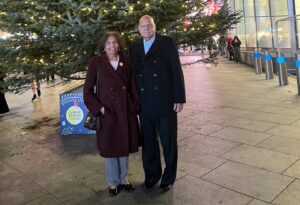
Mohammed Aslam with his wife
Raisa (pronouncer Riser) Oldroyd’s 83-year-old father Mohammed’s first symptoms began four days into a trip to Pakistan to visit family in May 2026 when began to feel pain in his arm.
“He had phoned to let us know that he wasn’t feeling well, that his left arm ached and he had gone to visit a doctor in Pakistan,” said Raisa, 37, who lives close to her parents in London and works as a teacher. “The doctor was not sure what was wrong. Arthritis was mentioned but they also suspected it may have been a clot caused by a deep vein thrombosis (DVT). He was given antibiotics but didn’t feel better. After a few days, he saw a different doctor and this time they diagnosed cellulitis. They put his arm in a sling so he could rest it. Dad phoned again and said he was worried about his arm and wanted to see his doctor back home in the UK. He booked a flight and returned on 25th May 2026.
“He came to visit me, my husband and son that evening. I remember vividly how he looked when he walked through the front door. He was uneasy on his feet and looked quite grey. He only stayed for half an hour to catch up with us and said that he was going to phone his GP because he was finding it difficult to move his hand.”
But during the night, Mohammed started to feel more unwell and phoned 111. An ambulance took him to Whipps Cross Hospital in Leytonstone, East London, in the early hours of the following morning. Multiple tests were run but doctors struggled to diagnose Mohammed initially thinking he had an infection somewhere and a low blood count. They gave him more antibiotics.
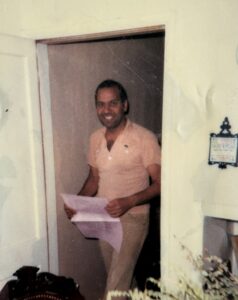
Mohammed in his early 30’s
“Over the next few days, Dad’s arm continued to swell and his blood count remained low. From this, they again suspected DVT. They gave him platelet and blood transfusions but his blood count continued to drop. Then they decided to do a biopsy.
“Once we heard that, I think we began to suspect it could be something more serious. My Mum, Ameena, had a biopsy following a period of feeling unwell almost eight years before and was diagnosed with aplastic anaemia (a rare and serious blood disorder where the bone marrow stops producing enough new blood cells and platelets). She had multiple blood and platelet transfusions, chemotherapy and was fortunate to have a successful stem cell transplant from her brother.
“So sadly, this was not unknown territory to us. But how was it possible to have both parents, both from ethnic minority groups, and both with blood disorders?”
On 5th June 2026, the Hematology Department at Whipps Cross Hospital phoned us to say they wanted the family to come to the hospital. They told them Mohammed had been diagnosed with acute myeloid leukemia (AML).
“They couldn’t say more about treatment until genetic testing had taken place to find out how severe his illness was and what treatments (if any) would be available to him. We had to wait at least two weeks for the results and decision. We knew how serious this was for Dad. We tried to remain positive and hoped that there would be treatment available for him.
Mohammed with his wife Ameena and daughters Raisa and Yasmin
“Each day during that time felt like an eternity. We were realistic and not to get our hopes up in case it wasn’t the news we wanted. Dad remained in good spirits. He said he understood what was going on but he appeared confused. He started to forget things and mix things up. The doctors put this down to him being overwhelmed from being in hospital for so long and not in his usual home environment.”
However after just a week, the family had a phone call asking them to come to the hospital.
“I kept thinking that the results were back a week earlier than expected – was this good news, it could be treated and Dad would have to start treatment right away or was this the worst?
“The consultant started the conversation with the word ‘unfortunately’ and it was like she didn’t need to say anything else because we knew. Dad’s AML was not able to be treated and was as severe as it could get. His age was certainly a contributing factor, but so too was the speed at which the leukemia was destroying his healthy blood cells. All that was discussed now was supportive care. Then came so many conversations and dilemmas. Should Dad stay at hospital? Should he be admitted to the palliative centre? Does he want to come home? It was decided that Dad would stay at hospital for a little longer, so that they could try and treat what had been finally diagnosed as a clot in his arm and monitor his blood levels. They continued with blood and platelet transfusions for a few days but eventually, this stopped.”
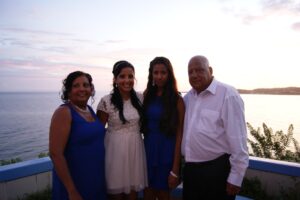
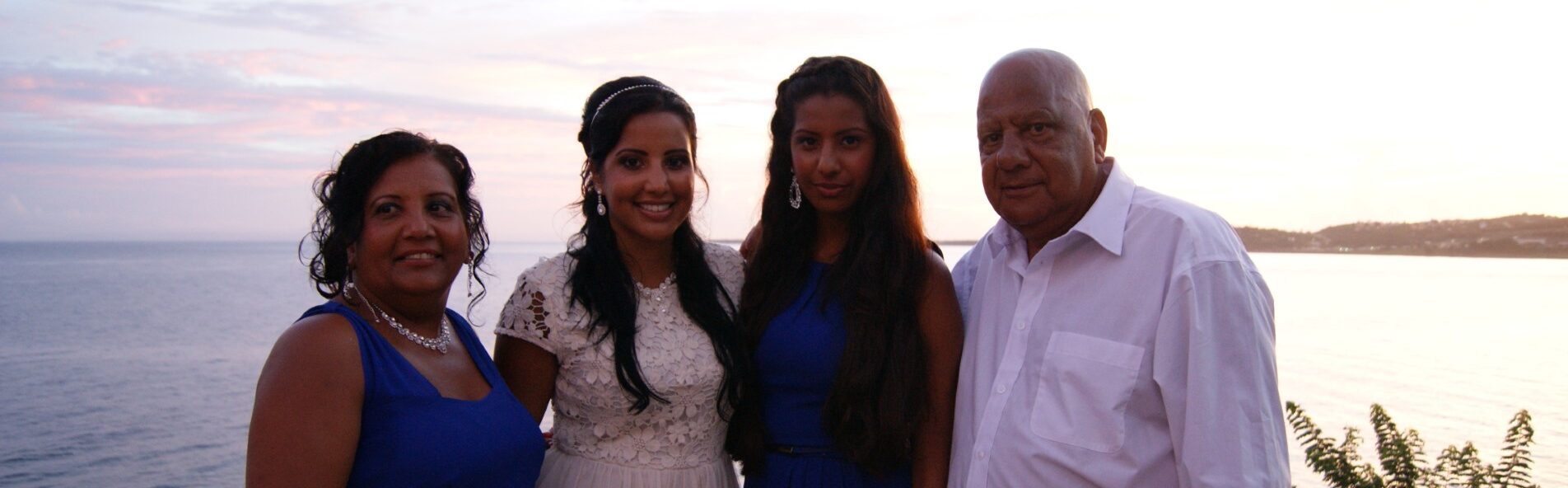
Mohammed Aslam with his wife and daughters in Tobago in 2013
After his diagnosis, Mohammed’s symptoms escalated and eventually he was unable to get out of bed. Doctors decided to ‘fast track’ him to go home and on 24th June, he was discharged.
“He was in high spirits when he was first wheeled through the front door at home. He was so happy to be home and to be so close to everyone. We became Dad’s full-time carers, giving him around 10 medications around the clock, including morphine. We were also supported by carers and Community Nurses. The team asked if we were sure we wanted Dad to stay at home with us and we absolutely were. This was the place for him.”
Mohammed passed away on the evening of 10th July 2026 with his family around him, just seven weeks after his symptoms began.
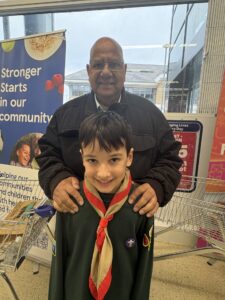
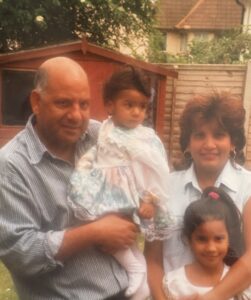
Mohammed Aslam with grandson Ammar
“Losing Dad to AML has changed our family’s lives in a way we could never have imagined. His diagnosis and death came completely out of the blue, leaving us struggling to come to terms with how quickly everything had changed. It has made us realise just how suddenly these diseases can change a family’s life.
“Our experience with both my parents has also made us much more aware of blood disorders and how important it is to recognise symptoms and seek medical advice quickly. It has opened our eyes to the fact that these conditions can affect anyone and has made us particularly conscious of the experiences of people from ethnic minority backgrounds.
“My Dad emigrated from Pakistan aged 21 and trained to be a nurse, eventually spending over 30 years managing care homes across London and Essex. My Mum emigrated from Trinidad at the same age and devoted her career to working in service of Trinidad and Tobago. In many Asian and Caribbean families, health and serious illnesses are not always spoken about openly. There can be a tendency to dismiss symptoms, put things down to tiredness and to simply carry on, without realising how important it is to get checked. Because Dad genuinely loved the work he did and held the NHS and its work in such high regard, his illness and death have been particularly difficult for our family. Dad visited the doctors regularly, sometimes too much and we would tease him! He made the right decision – to get a second opinion in Pakistan – and then because he still wasn’t happy, he came back to the UK and immediately requested to see his own doctor.
“The other issue is stem cell and blood donors. When Mum had finished her chemotherapy and was waiting for a transplant, there was simply no one on the stem cell donor register that matched with her ethnicity. Fortunately, her brother was able to fly from his home overseas to donate. I would like to see both these issues change.
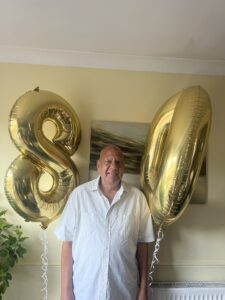
Mohammed’s 80th-birthday
“Dad’s death has left a huge hole in our lives. Although sharing his story is incredibly difficult, I hope that by talking about what happened to him encourages people, particularly within Asian and Caribbean communities, to talk more openly about leukaemia and blood disorders. Learn the symptoms and, most importantly, don’t ignore changes in their health. If even one person recognises a symptom, speaks to their doctor and gets checked because of Dad’s story, then sharing his experience will have achieved something meaningful. If we can help someone get an earlier diagnosis or treatment, then his legacy will be one of awareness, education and saving lives.”
Share your story
We want to help people tell and share the leukaemia stories that matter – stories like Mohammed’s and stories like yours.
Related posts
20 October 2023
Emerging leaders accolade for former Leukaemia UK John Goldman Fellows
Former Leukaemia UK John Goldman Fellows, Dr Matthew Blunt, University of Southampton and Dr Konstantinos Tzelepis, University of Cambridge have been recognised as ‘Emerging Leaders in Leukaemia’ by the major…
11 January 2019
Leukaemia: Investigating stem cells to prevent cancer
Dr Alice Giustacchini, University College London and John Goldman Fellow
11 February 2022
International Childhood Cancer Day: Dr Samanta Mariani reflects on her research into infant leukaemia
On International Childhood Cancer Day, Dr Samanta Mariani reflects on her research into infant leukaemia, what drives her in her work and her hopes for the future.
25 August 2020
Angela Smith-Morgan to step down from her role as Co CEO of Leukaemia UK
After eight successful years with us, Angela Smith-Morgan will be stepping down from her role as Co CEO of Leukaemia UK on 3rd September.