
08 Nov 2023
“I learned to be positive”: Lizzi’s AML story
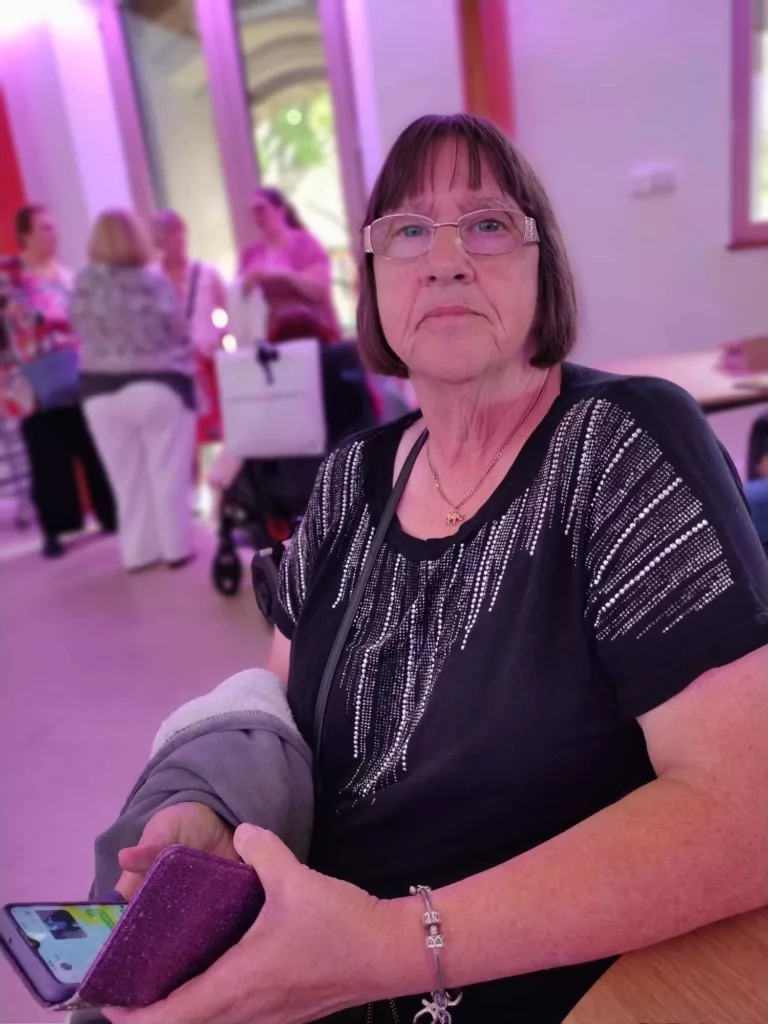
“The first thing that happened about nine months before my diagnosis is I went off drinking tea which I normally love,” said Lizzi Wright, 64. “Then I started losing weight at about the rate of 4lbs a week. I visited the doctor every two weeks. They told me I was just run down and depressed.
“Then in February 2013 I developed an infected finger that went almost black. The nurse said it was a whitlow and dressed it. But over the next two weeks in the left corner of my mouth I developed a big black sore, and also ulcers in my mouth which were horrifically painful.
“By that time I had lost nearly five stone. I kept phoning the doctors and asking for a blood test but it never happened. By this time I was too tired to care. My husband Alan and my family were worried.
“On March 31st I asked the receptionist at the doctor to let me have a blood test. They gave me an appointment for 9am on 4th April. At 4.30 pm the surgery rang to tell me that a bed was ready for me in Manchester Royal Hospital on Ward 44 – the haematology ward.”
Lizzi was diagnosed with acute myeloid leukaemia (AML) that evening, and treatment was started immediately.
“I got there at 6pm and was given a vitamin K syringe straight away which was fantastic. It cured my finger and mouth sore in days. After three days with further tests, my consultant spoke with me and my husband and told us if I had chemotherapy I had a 70% chance of surviving. If not I had just three weeks left. Of course I chose the chemo.”
Lizzi had four rounds of chemotherapy and was in hospital for four months.
“The main side effect was diarrhoea. But my weight started to come back. My hair was shaved off which was a relief because holding your hair in your hands whilst washing it is so scary. By the end of April I was in remission.
“Once I finished the initial treatment I went once a month for tests for a year, then it was every three months for two years, then another two years every six months. Now I just have full blood counts done at the doctor once a year. My Hickman line stayed in for two years. The worst part of it all was the boredom and letting my mind overthink. But I learnt to be positive and make plans for the future.
“I call Manchester Royal a place of angels. They were fantastic. The impact at first on my family was tears and fears of course. But we are now even closer than ever this last 10 years and we all love life together. My journey is to keep well. No stress because all cancers love stressed bodies. Enjoy life.”
Read more stories from people affected by leukaemia.
Related posts
3 February 2022
Leukaemia UK awarded Christmas Grant to support life-saving research
Leukaemia UK are delighted to have been awarded a special Christmas Grant from Kusuma Trust UK.
14 March 2023
Percy & Nell says Pants to Leukaemia with bespoke charity collaboration
Independent clothing brand Percy & Nell has produced a unique range of sweatshirts, t-shirts, beanies and tote bags, with all profits going to Leukaemia UK. The collaboration comes off the…
21 September 2022
A record year for Leukaemia UK London Marathon runners
62 runners put their best feet forward for Leukaemia UK A record 62 runners are taking part in this year’s London marathon to help fund vital research into leukaemia diagnosis,…
2 October 2023
Three leading charities collaborate to fight childhood cancers
New Partnership we3can to fund research into three most common childhood cancers Today (2nd October 2023), three leading cancer charities have launched a new collaboration in order to improve the…