
05 Feb 2026
Jody’s story: “Without treatment I only had two weeks to live”
Like many 17-year-olds, Jody White spent the summer between school and sixth form falling in love with his first proper girlfriend and hanging out with his friends. Autumn saw the start of A Levels at college in Bridgnorth, Shropshire. During this time, Jody had also become aware that he always seemed to be under the weather, with constant illnesses.
“I had colds and then ear infections which were so bad I temporarily lost my hearing,” said Jody, now 43 and living in Presteigne in Powys. “During a family holiday in Ibiza I developed large inexplicable rashes on different parts of my body which would come and go, and had constant low-level fatigue. I ignored it at first but I had a deep sense something was wrong and it eventually started to get me down.
“The doctors were stumped as to why these things kept happening, and kept giving me antibiotics which didn’t work. They suspected glandular fever, so I was eventually sent to the local hospital for a blood test. Later that day they rang my home and told my mum we needed to get to the surgery asap.
“A senior doctor pulled no punches in delivering the news. He said my white blood cell count was sky high. He then told me I had leukaemia. I later found out that the situation was so severe that without treatment I only had around two weeks to live. It felt like the world had just opened up and swallowed me. My future crumbled into dust and slipped through my fingers. I was scared and confused.”
Jody was admitted to Shrewsbury Hospital’s haematology ward that evening and on the 10th October, 1999 he was diagnosed with an extremely rare form of the blood cancer.
“Once in hospital, the consultant was able to specifically diagnose acute lymphoblastic leukaemia (ALL) quite quickly, but that changed after they also found myeloid markers. My official diagnosis was acute undifferentiated leukaemia (AUL) which I was told was incredibly rare.”
AUL features immature blood cells that do not fit into the typical lymphoblastic or myeloid types of leukaemia. Given its rarity, little is known about its incidence, survival, and optimal management. A study in the US found it occurs in just 1.34 cases per million people per year*. Another study determined the median age for diagnosis of AUL to be in the over 70-year-old age group, making Jody’s diagnosis even rarer.
“My consultant Dr Nigel O’Connor said he’d never seen it before. He was one of the top leukaemia experts in the country. I immediately trusted him and felt safe. I was very lucky, he was a wonderful man, an absolute character. He would do his rounds in the morning in a Jimi Hendrix t-shirt, loudly greeting everyone and make terrible jokes! For him to have that lightness and playfulness was so refreshing and so needed for a situation so intense and serious.”
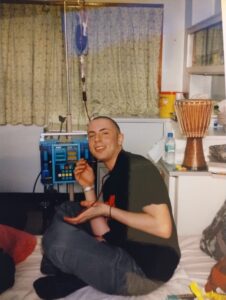 “Treatment began almost immediately, the very next day after admission. I had to start processing what was happening. It was like the proverbial tonne of bricks, a complete shock. A million things flashed through my mind at once.”
“Metaphors about ‘fighting’ or ‘battling’ cancer are controversial, and I don’t think this kind of attitude should be expected from everyone – each person is different. But for me it really helped. I had a very real sense of my body and my immune system literally fighting the leukaemia cells. To align my outlook with my body’s natural processes made absolute sense to me.
“At one point after my third round of chemo I almost died from a nasty pneumonia/MRSA combination infection. It left me struggling to breathe. I was admitted to ICU where they put me on self-administered morphine for the pain. This gave me hallucinations and dreams. There were some wild adventures in the desert guided by an old hippie cowboy and a military combat team! During one dream, I was inside my body with a SWAT team in a huge cavern, hunting out and shooting dark beings. It wasn’t frightening at all, it felt like what was actually happening inside me and I intuitively knew it was part of the process.”
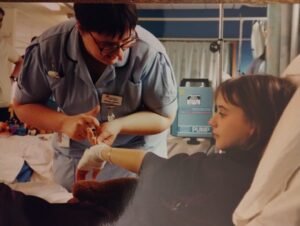 Jody went through several rounds of chemotherapy, one of radiotherapy and many infusions, tests and other drugs and procedures over several months. After finally going into remission, he was told a bone marrow transplant would be needed to ensure he had the lowest risk of relapse. In late February 2000 Jody received his stem cell transplant at Birmingham Queen Elizabeth Hospital. His four siblings were tested and his 11-year-old sister Jessie proved to be a perfect donor match.
“She was so young but she understood the responsibility of her role and she really stepped up. We were always close as children, but we were extra close after the transplant – we’d burst out singing the same songs and finish each others’ sentences. We’re still close to this day.
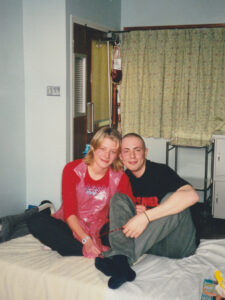 “My family were amazing throughout. My parents Steve and Sue took turns at being with me every night in hospital, as well as holding down jobs and caring for my other siblings. My first girlfriend Tasha, who I’d only been with for a few months after a summer romance, stuck by me throughout the whole thing. She was amazing, and it actually inspired her to go and study nursing and become a nurse.”
Recovery from his transplant was a difficult time for Jody with attacks of shingles, skin rashes and Graft Vs Host Disease (GvHD) symptoms. But by summer of 2000 he felt well enough to go to the V music festival with Tasha. In September he was back at college to restart his first year of A Levels.
“In the end I got three B grades and went to uni at De Montfort to study multi-media design. I had to have routine blood tests and bone marrow biopsies for the ten years after my bone marrow transplant, but when the consultant finally said to me ‘I don’t think we need to see you anymore’ and I was considered cured, it felt incredible.”
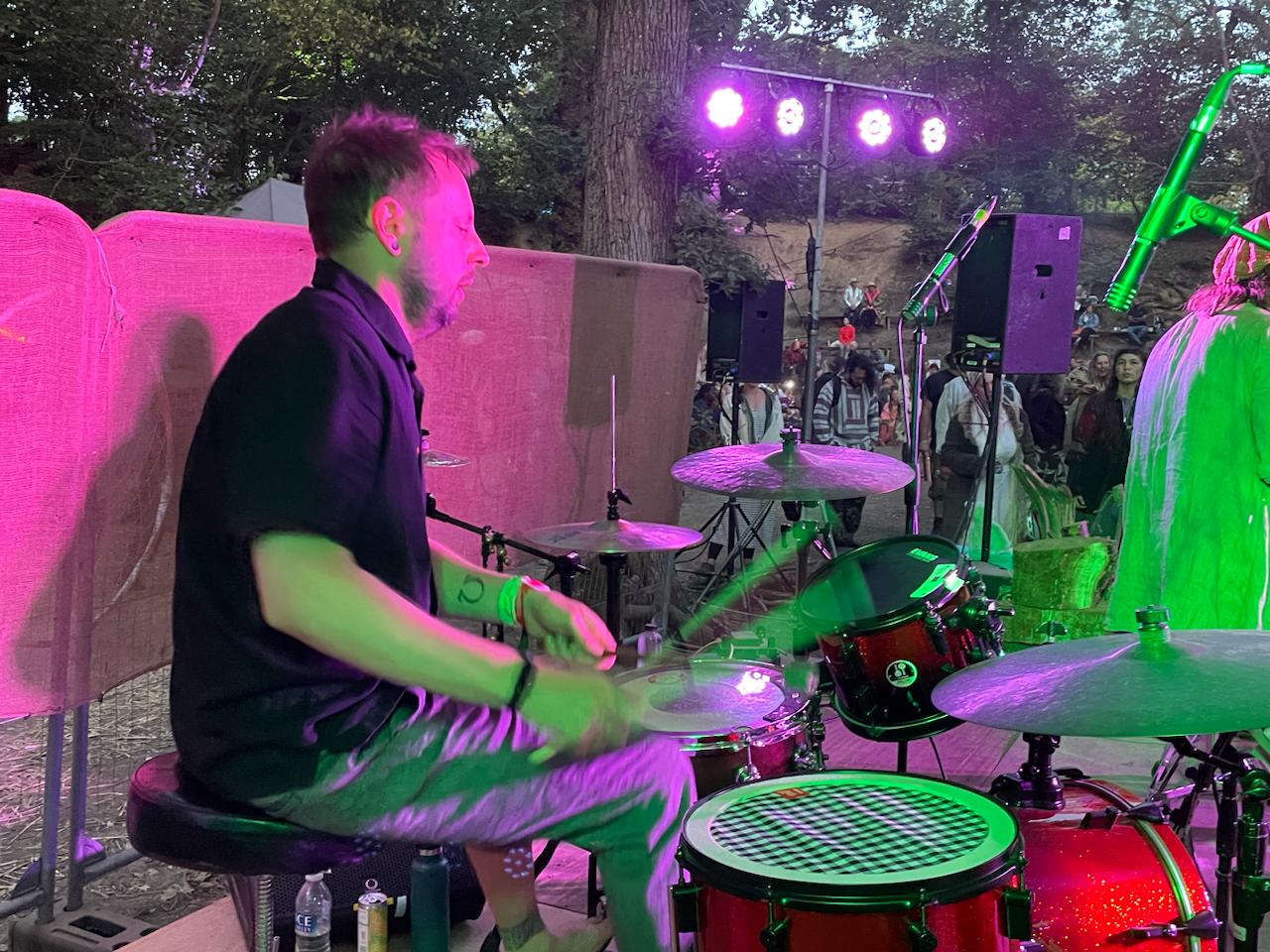
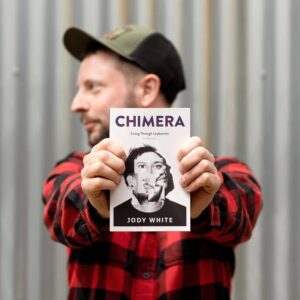 Jody was by that time playing the drums in a band and living in Brighton, successfully developing his career as a designer. He now lives in Wales, still designing and currently playing in the band of Welsh singer Bethan Lloyd. In the 25 years since his leukaemia, he’s also been on what he describes as a deeply spiritual journey to help make sense of and incorporate the impact of his diagnosis and treatment on his life. He has used what he’s learnt to publish his first book, Chimera.
“My illness broke me apart, changed everything about who I thought I was and launched me into a whole new way of being in the world. My experiences in hospital were the toughest of my life. Near death experiences that threw me into incredibly transformative states of consciousness and spat me out the other side, reborn. When I moved to Brighton I found a sense of belonging in the alternative community. Working in the day as a graphic designer I spent my spare time making music and exploring yoga, herbalism, foraging, shamanism and forest bathing. I had a sense of the mind-body-spirit connection in what I had been through.
“As a result, I uncovered a deep sense of spirituality, which helped me make sense of the experiences and enabled me to process them. In 2016 I decided to write a book about my leukaemia story as the memories were so clear. Partly, this was for my own benefit, but I also felt it important to share my experience with others, perhaps giving them hope in some small way. I’m pleased to say it’s been very successful, and I’m currently finishing my next book which is a coming-of-age tale inspired by my travels in South America.
“I’m pleased to say I remain energetic and healthy, for which I am forever grateful. Leukaemia might have broken me, but I put myself back together in a way that expanded my sense of what it means to be alive.”
Funding world-class research


Related posts
4 September 2023
Less than 1% of Brits can identify all the most common symptoms of one of the deadliest types of cancer
New research launched today by Leukaemia Care and Leukaemia UK reveals that less than 1% (0.4%) of UK adults can accurately identify the four most common symptoms of leukaemia –…
19 September 2023
“Fundraising never tasted so good!”: Star-studded evening raises over £235,000 for life-saving leukaemia research
Chefs and celebrities mingled at The Dorchester last night for a gastronomic spectacular in aid of Leukaemia UK, raising over £235,000 to support world-class research into the devastating disease. Who’s…
25 May 2022
Leukaemia UK reveals new strategy to go further than ever to stop leukaemia devastating lives
Leukaemia UK has revealed a new strategy to go further than ever to save and improve more lives, through research, awareness and advocacy.
6 March 2024
TV baker Juliet Sear announced as Leukaemia UK Ambassador
Leukaemia UK is excited to announce long-time supporter Juliet Sear as their latest celebrity Ambassador. Juliet, who has been an enthusiastic supporter of Leukaemia UK for several years now, wanted…