
Signs and symptoms of leukaemia
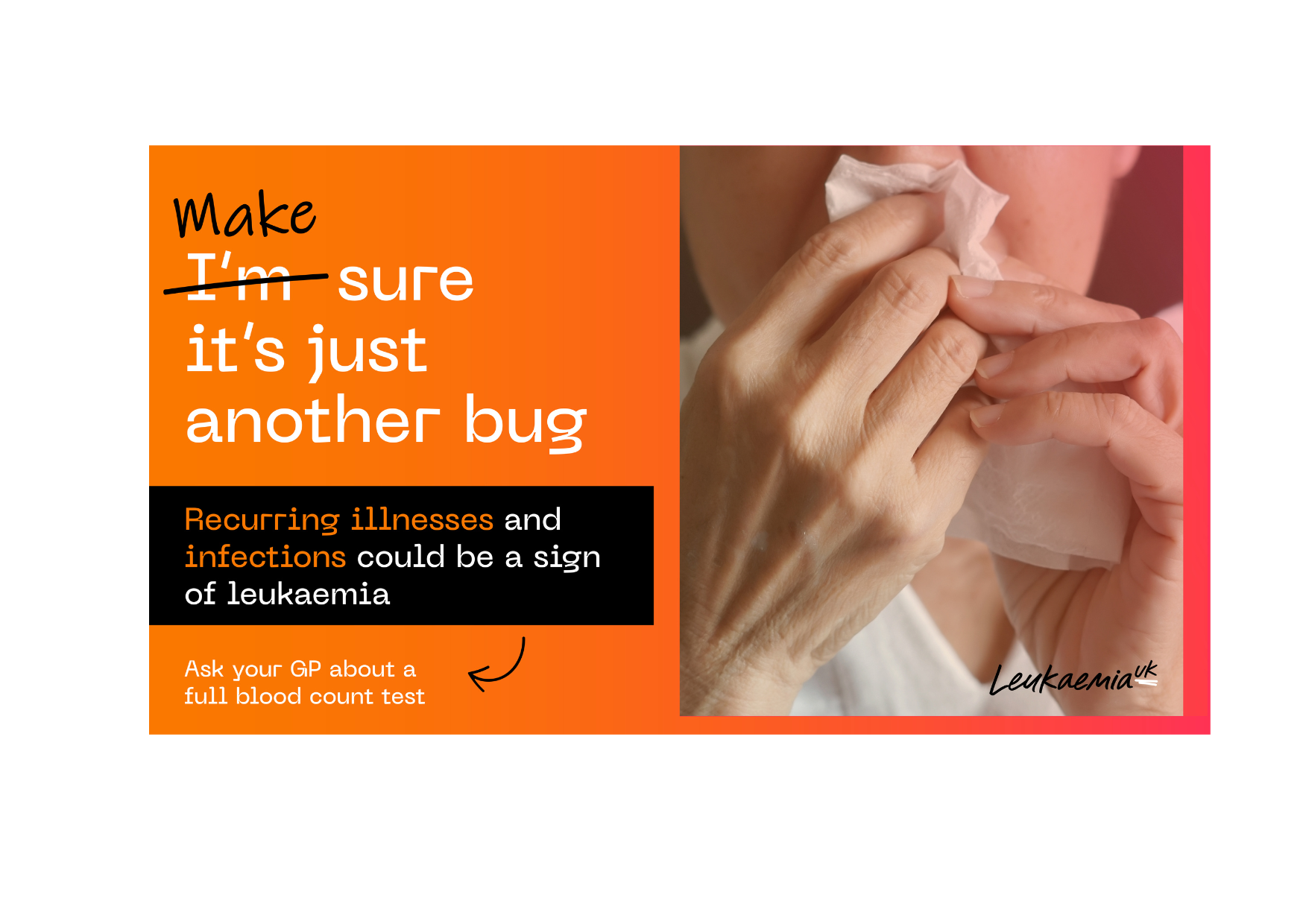
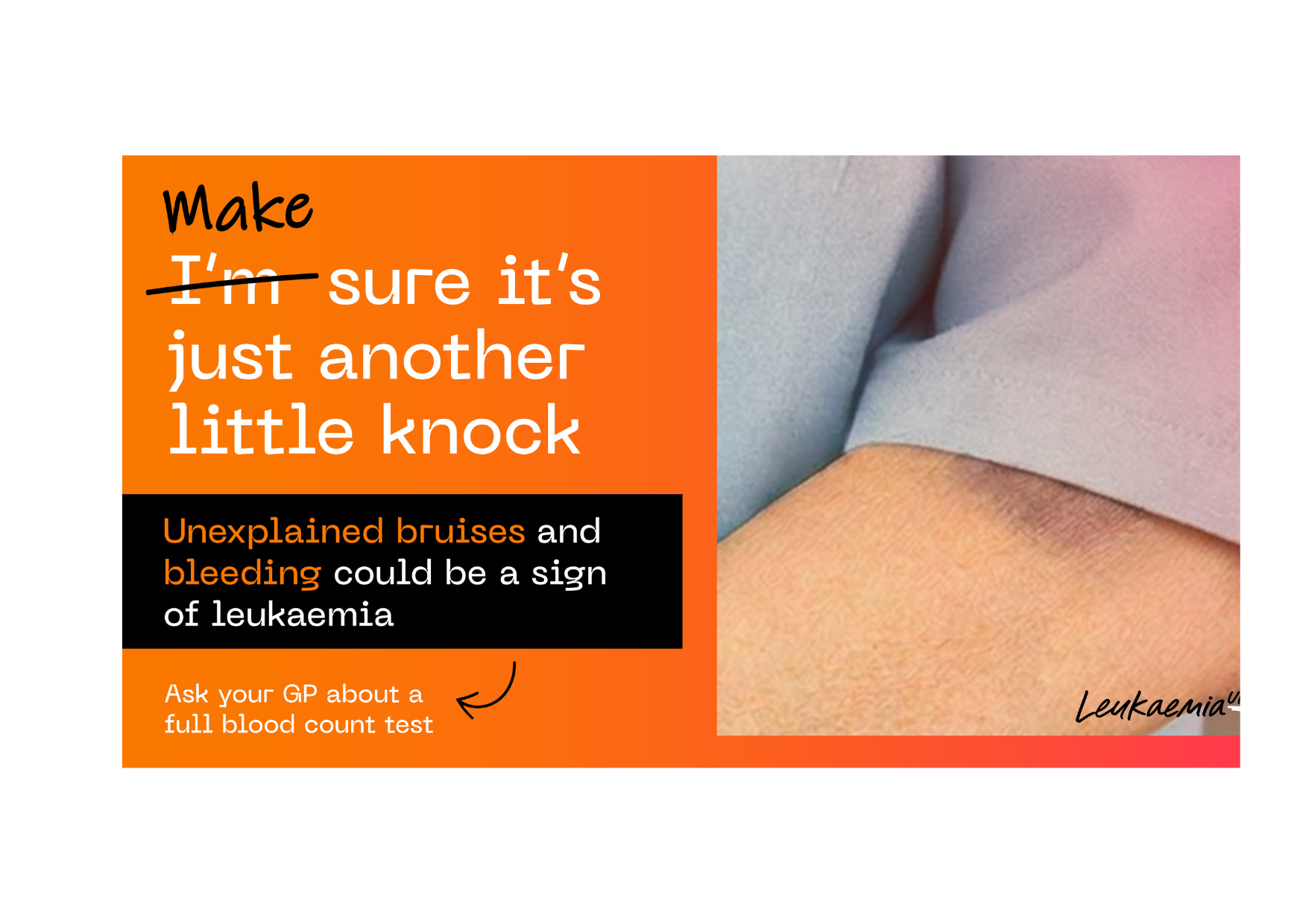
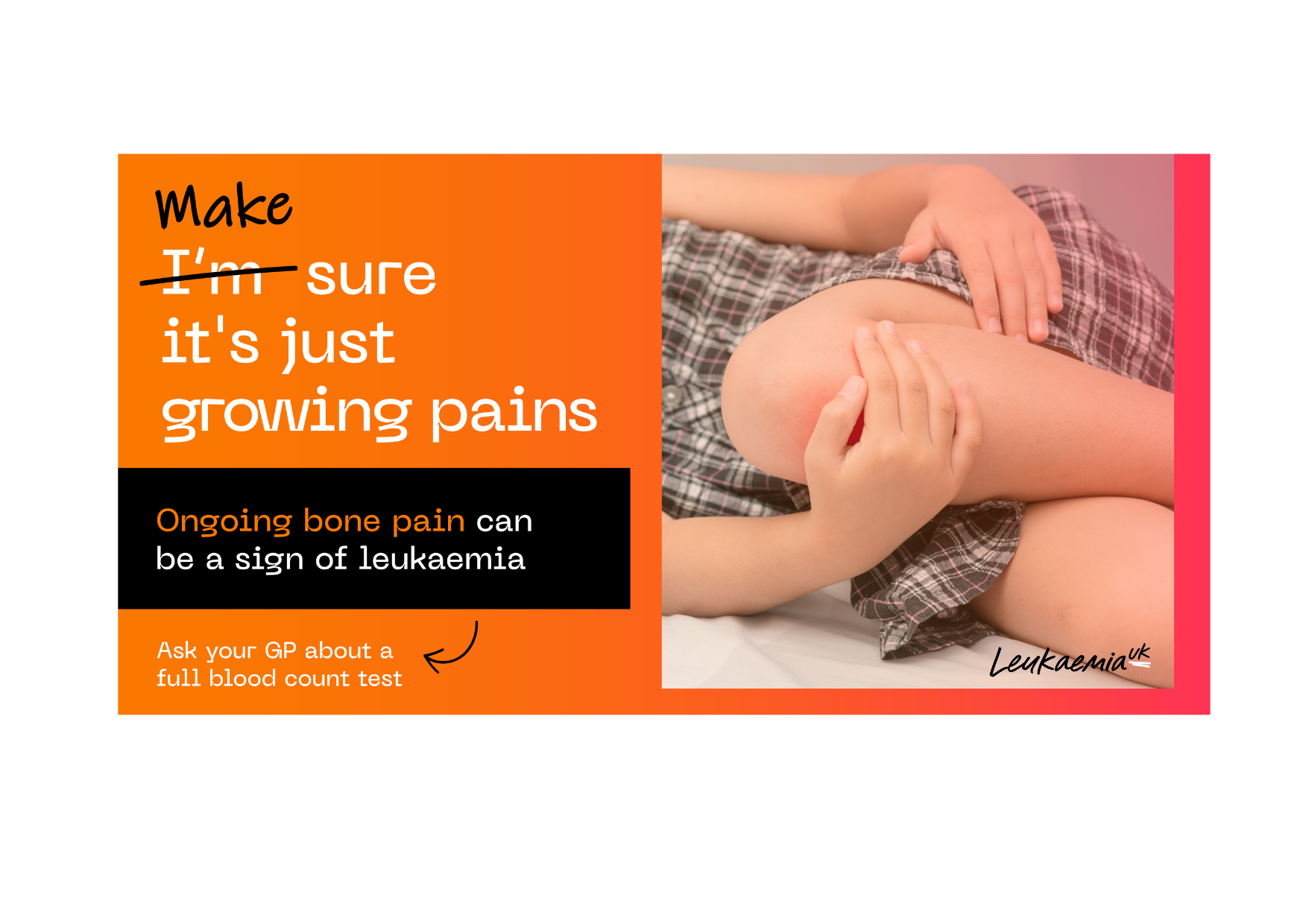
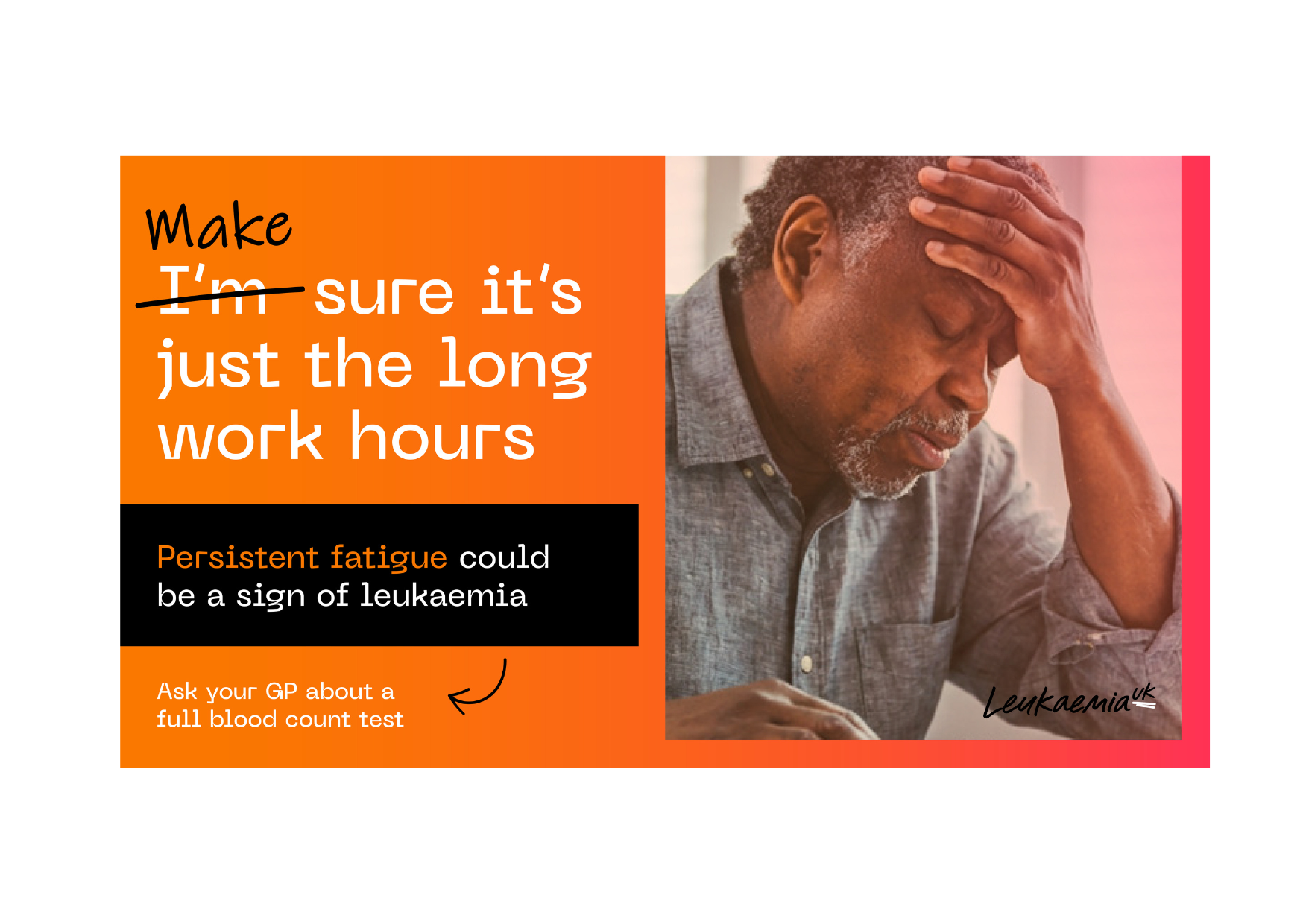
Make sure it’s just the long work hours, another bug, another little knock, or just growing pains.
Leukaemia can be difficult to recognise because many of its symptoms are similar to those of common, less serious illnesses. This is why it is not always easy to spot and why knowing what to look out for matters. If something feels persistent, unusual, or out of the ordinary for you, it is always worth speaking to your GP.

At a glance
- The most common symptoms of leukaemia include persistent fatigue, frequent or recurrent infections, and unexplained frequent or recurrent bruising or bleeding
- Other symptoms can include night sweats, unexplained weight loss, swollen lymph nodes, bone or joint pain, unexplained rashes and shortness of breath
- Symptoms can vary depending on the type, some develop quickly, others slowly over months or years
- In most cases these symptoms will not be caused by leukaemia, but persistent or unexplained symptoms should always be checked
- Ask your GP for a full blood count test, a simple blood test that can help rule out leukaemia
What is leukaemia?
Leukaemia is a type of blood cancer. Blood cancer is the fifth most common type of cancer and the third biggest cancer killer in the UK.
Leukaemia starts in the bone marrow with an overproduction of abnormal white blood cells. This crowds out the healthy blood cells and makes it harder to fight infection, carry oxygen and stop bleeding.
There are several types of leukaemia. Some develop quickly (acute leukaemia), while others develop more slowly (chronic leukaemia).
👉 Learn more about what leukaemia is and the different types
What are the main symptoms of leukaemia?
Feeling tired from time to time is common and is usually caused by everyday factors such as stress, poor sleep, or infections. However, persistent or unusual tiredness (fatigue) can sometimes be a sign of leukaemia.
Most people experience bruising from time to time, usually after knocking or bumping into something. However, unexplained or unusual bruising or bleeding can sometimes be a sign of leukaemia.
Most people get infections from time to time, especially during the winter months. However, frequent, persistent, or unusual infections may require further investigation.
When should you see a GP? 👩🏽⚕️
You should speak to a GP and ask for a full blood count test if you experience symptoms that are persistent, unexplained, or unusual for you, especially if you have more than one of the symptoms listed above.
A full blood count test tells you about the cells in your blood, while other blood tests measure the chemicals, hormones, and substances dissolved in it.
While these symptoms are often caused by less serious conditions, it’s important to get them checked.
What are the other symptoms of leukaemia?
This can include being unable to attribute weight loss to diet or exercise. As well as losing weight quickly over a short period of time.
These are enlarged lumps that can be seen or felt underneath the skin, usually in the armpit, neck or groin area. Often, they can be the result of an everyday infection or allergy. However, they might be a sign of leukaemia, particularly if they are painless, last longer than two weeks, are hard or unmovable, or grow in size.
This can include a sharp pain or swelling in the stomach and constantly feeling full.
The temperature at which night sweats occur, and the quantity of sweat lost can help determine if a person’s night sweats are a symptom of leukaemia. If night sweats are regular, drench you in sweat, or occur in cool environments it’s worth visiting your GP.
This can be a sharp pain or a constant dull ache in one or more bones. Bone pain caused by leukaemia is usually felt in the arms and legs, or in the ribs and sternum of the rib cage. Joint pain in ankles or wrists and swelling of large joints like the hips and shoulders can also be experienced.
Symptoms of leukaemia can include breathlessness that comes on suddenly or during activities that would normally be effortless for the person, breathlessness lasting longer than a month and breathlessness that worsens over time.
Skin rashes are likely to be unexplained and can vary in appearance but anything new or unusual that doesn’t go away should be discussed with your doctor
Nick’s Story
Nick first got diagnosed with acute myeloid leukaemia (AML) in 2018. He showed all the symptoms: extreme tiredness, frequent viral infections, and deep bruising.
A stem cell transplant on 25th September 2018, represented a new start in life for Nick. It gave him the opportunity to play in the British Transplant Games where he won Gold in swimming.

Frequently asked questions about leukaemia symptoms
Early signs often include fatigue, frequent infections, and unexplained bruising. These symptoms can be mild at first and may be mistaken for other conditions.
Some symptoms may appear gradually or seem to come and go, particularly in slower developing types of leukaemia.
Children may experience similar symptoms, but bone pain, fatigue, and frequent infections are often more noticeable. You can see more on our page specifically on leukaemia in children.
No. Fatigue is very common and usually caused by less serious conditions. However, persistent or severe fatigue should be checked by a GP.
Leukaemia symptoms in children
Leukaemia is the most common childhood cancer, accounting for around a third of all cancers in children under 15. Symptoms in children are similar to those in adults but can also include bone pain, abdominal swelling, and unexplained vomiting.
Find out more
Symptoms can vary depending on the type of leukaemia. Find out more about each type on our website:
- Acute myeloid leukaemia (AML)
- Acute lymphoblastic leukaemia (ALL)
- Chronic myeloid leukaemia (CML)
- Chronic lymphocytic leukaemia (CLL)
For general health information and guidance, visit nhs.uk.


Disclaimer: While we are able to highlight the common signs and symptoms of leukaemia, these symptoms are often caused by other medical conditions. As a charity we are not able to give specific medical advice to patients, but if you have any concerns contact your GP.
Last published: June 2026