
Using computer simulations to predict when lymphoma will return
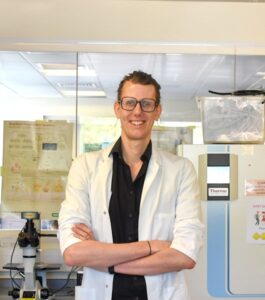
Dr Simon Mitchell, from the University of Sussex, was awarded a John Goldman Fellowship in 2020 to use computer simulations of disease to carry out virtual experiments.

Inside every cell are thousands of different proteins that work together in complex pathways and networks. In cancer, some of these proteins – and the networks they belong to – malfunction, and many precision treatments are designed to correct these faults.
Professor Mitchell develops detailed computer models of these protein pathways and networks. Having now been awarded the 2025 John Goldman Fellowship Follow-up Fund, he plans to build on his earlier work to investigate why some patients with a particular form of lymphoma either relapse or fail to respond to treatment.
The challenge
Diffuse Large B-Cell Lymphoma (DLBCL) is the most common type of blood cancer, developing from rapidly growing B lymphocytes and often presenting with fast-developing lymph node enlargement and general symptoms.
Although DLBCL is classified as a lymphoma because it primarily affects lymph nodes and lymphatic tissues, rather than the blood and bone marrow like leukaemia, both diseases originate from abnormal blood-forming cells, meaning research into cancer biology, immune dysfunction, targeted therapies, and resistance mechanisms often overlaps and informs advances across both lymphoma and leukaemia.
Current treatments are based on chemotherapy and fail in up to 40% of patients. This failure in treatment working is due to a significant proportion of patients either relapsing after treatment or the disease not responding to initial therapy at all. In these cases, outcomes are particularly poor, especially for older or frailer patients who cannot tolerate intensive treatments. This variability in biology, combined with the limited durability of standard therapies for relapsed disease, makes DLBCL a persistent clinical challenge to treat.
The science behind the research
Some precision-targeted drugs are designed to kill cancer cells by activating the body’s own cell-death pathways. However, in many patients these treatments become less effective because cancer cells receive protective signals from their surrounding environment, known as the tumour microenvironment. This project uses advanced computer models – essentially sophisticated simulations of a patient’s tumour – to bring together results from laboratory tests on an individual’s cancer cells. These “virtual tumours” allow researchers to safely test how different drugs, or combinations of drugs, are likely to work before a patient receives them. The goal is to identify a small number of simple tests that doctors can use in the clinic to personalise treatment choices and select combinations that are more likely to overcome drug resistance.
What difference will this research make?
If successful, this approach could enable doctors to tailor therapies to the biology of each individual patient rather than relying on a one-size-fits-all approach. This project works to find answers for patients with DLBCL where they respond poorly to treatment or relapse. This research has the potential to inform further blood cancer disciplines especially in cases where patients can respond very differently to the same treatment, knowing how a patient will respond to a particular treatment from the outset could mean identifying the most effective drug or drug combination from the beginning, improving survival and disease control – this is what this work aims to do. At the same time, it could help patients avoid unnecessary side effects from treatments that are unlikely to work for them, reducing toxicity, hospital time, and the overall burden of living with leukaemia and lymphomas.
Project information